
Tracking stablecoin flows in 2026
The stablecoin market has entered a period of structural expansion, with total supply reaching new heights as institutional adoption accelerates. While retail speculation remains a visible layer of the ecosystem, the dominant force driving liquidity is the integration of stablecoins into traditional finance rails. This shift is no longer theoretical; it is reflected in the growing balance sheets of major issuers and the increasing volume of cross-border settlements.
The baseline for 2026 shows a clear divergence between retail holding patterns and institutional usage. Data from BVNK indicates that stablecoin holdings are rising rapidly, with over half of holders planning to increase their positions in the coming year. However, this retail accumulation is complemented by a more significant trend: the migration of corporate treasury functions and payment processors toward stablecoin infrastructure. The utility of these assets is expanding beyond mere speculation into tangible liquidity management.
Regulatory clarity is beginning to shape these flows. The European Union’s Markets in Crypto-Assets (MiCA) regulation has created a framework for "permitted stablecoin issuers," forcing a consolidation of the market around compliant, transparent entities. This regulatory pressure is filtering out opaque issuers and directing institutional capital toward assets with verifiable reserves. The result is a more stable, albeit less volatile, market environment that appeals to risk-averse institutional players.
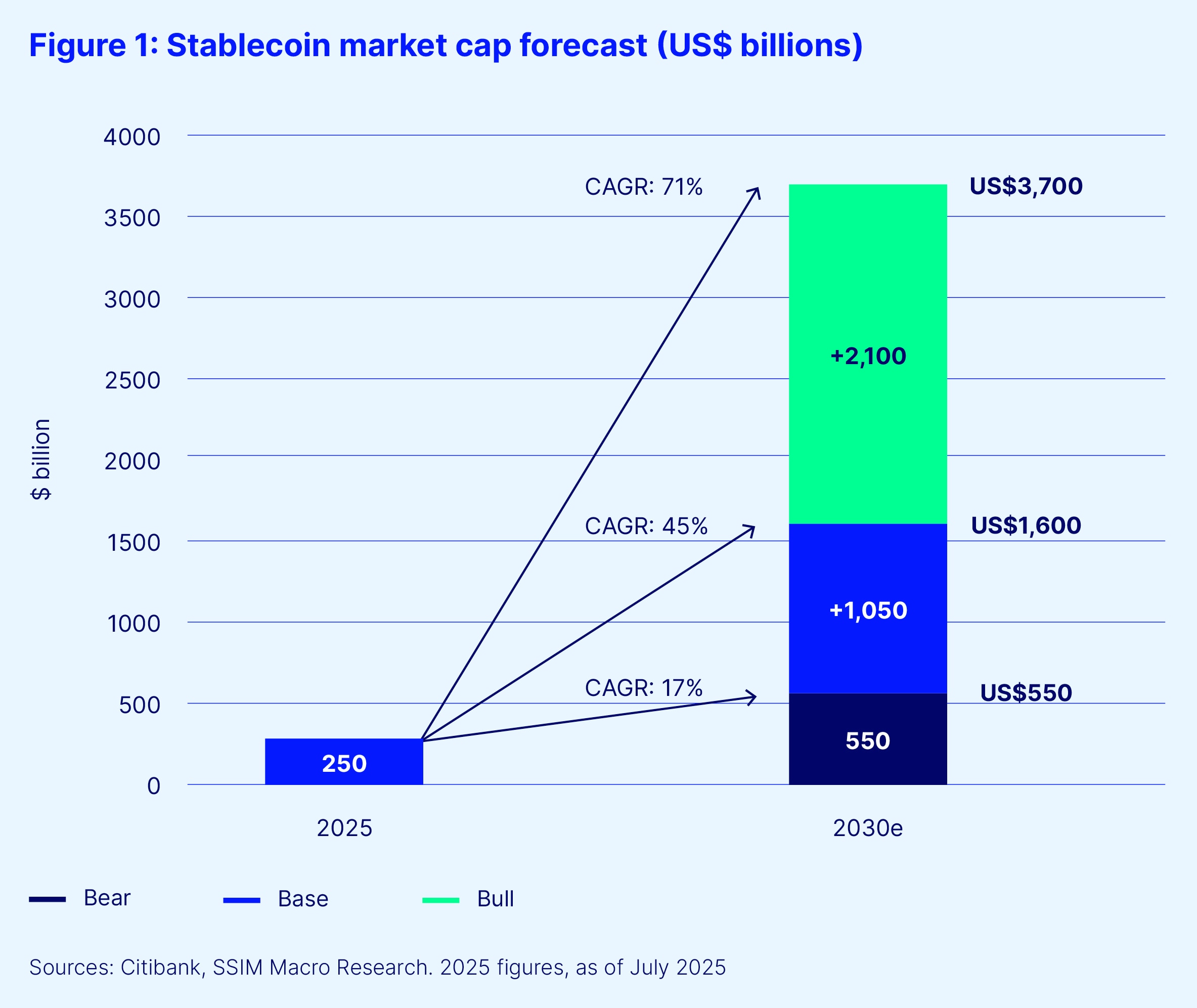
To visualize the scale of this growth, the following chart illustrates the total stablecoin market capitalization and supply trends over the last two years. The upward trajectory underscores the increasing reliance on digital dollars for both retail and institutional liquidity needs.
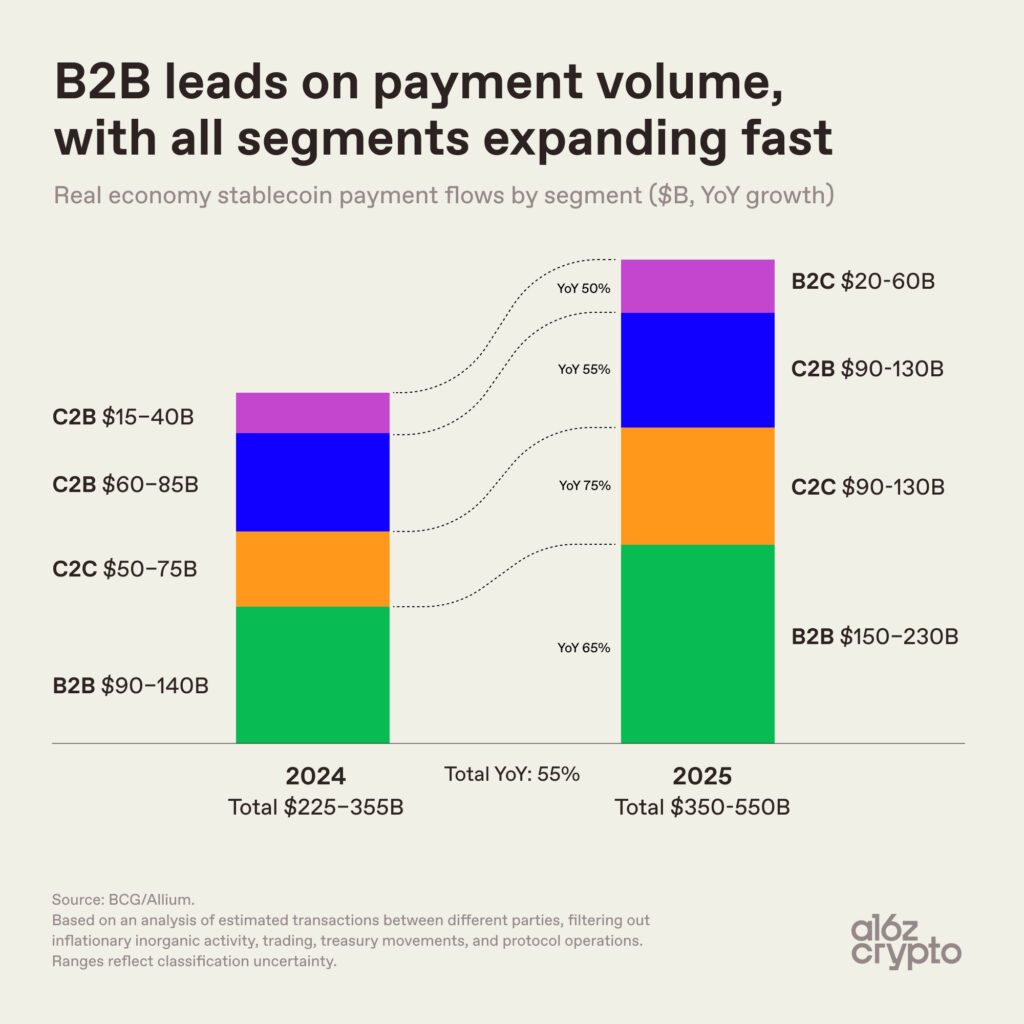
This growth in supply does not yet translate to a dominant share of global payments. Despite the billions in circulating supply, stablecoins still represent a fraction of the trillions moved through traditional correspondent banking networks. The infrastructure for mass adoption is being built, but the transition from niche crypto utility to mainstream payment rail is incremental. The focus for 2026 is on efficiency gains and regulatory compliance rather than explosive volume spikes.
As we look deeper into the mechanics of these flows, it becomes clear that the next phase of stablecoin evolution will be defined by interoperability and tokenized real-world assets (RWAs). The liquidity currently trapped in siloed blockchain networks is beginning to flow more freely, driven by the same institutional demand that is stabilizing the market.
RWA tokenization drives institutional liquidity
Real-world asset (RWA) tokenization is shifting liquidity from traditional banking rails to blockchain networks. In 2026, the primary driver of new stablecoin demand is not retail speculation, but the institutional need for efficient settlement of tokenized assets. This transition represents a structural change in how capital moves through global finance.
The mechanics are straightforward: as traditional assets like treasury bills and private credit are tokenized, they require a native settlement layer. Stablecoins provide this layer, offering 24/7 finality and programmable compliance. This creates a direct pipeline for liquidity to flow from on-chain reserves into real-world yield-generating assets.
This shift carries significant implications for the traditional banking sector. Stripe’s analysis of 2026 trends warns that large-scale adoption could concentrate reserves in a few key institutions, potentially pulling deposits away from commercial banks. As liquidity becomes more programmable, the traditional intermediation model faces pressure to adapt or risk disintermediation.
USDC vs USDT market share dynamics
The stablecoin landscape in 2026 is defined by a divergence in utility. While USDT (Tether) retains dominance in volume within emerging markets and cross-border retail flows, USDC (Circle) has solidified its position as the preferred instrument for institutional liquidity and Real World Asset (RWA) tokenization. This split reflects a broader maturation of the market, where regulatory clarity increasingly dictates where capital settles.
USDC’s advantage lies in its alignment with the GENIUS Act and other emerging US regulatory frameworks. As institutions integrate tokenized treasuries and bond funds into their balance sheets, the demand for issuers with transparent reserves and rigorous compliance protocols has surged. Circle’s proactive engagement with regulators has made USDC the default bridge between traditional finance and on-chain liquidity, particularly in contexts where audit trails and legal certainty are non-negotiable.
Conversely, USDT continues to capture the majority of trading volume on global exchanges and serves as the primary settlement layer for cross-border payments in regions with less restrictive financial infrastructure. Its network effects in retail and speculative trading remain formidable, but its growth in institutional contexts is constrained by ongoing regulatory scrutiny in key Western markets.
The following comparison highlights the structural differences driving these distinct market positions.
| Feature | USDC | USDT | Market Impact |
|---|---|---|---|
| Primary Use Case | Institutional & RWA Settlement | Retail Trading & Cross-Border Payments | USDC leads in tokenized asset integration; USDT dominates exchange volume. |
| Regulatory Status | High clarity (US/UK/EU aligned) | Mixed (ongoing compliance efforts) | USDC preferred for compliant institutional capital; USDT faces friction in regulated entities. |
| Reserve Transparency | Real-time attestations & audits | Quarterly attestations & historical audits | USDC’s transparency reduces counterparty risk for large-scale investors. |
| 2026 Market Trend | Growing share in DeFi & TradFi bridges | Stable share in emerging markets | USDC benefits from RWA tokenization; USDT remains resilient in high-inflation economies. |
Regulatory clarity turns stablecoins into a cross-border payment rail
The passage of the GENIUS Act in the United States has shifted stablecoins from a speculative asset class to a regulated financial utility. By establishing clear reserve requirements and redemption rights, the legislation provides the institutional certainty needed for high-volume corporate treasury management. This regulatory framework allows stablecoins to function as a practical settlement layer, bypassing the inefficiencies of traditional correspondent banking.
Global adoption follows a similar trajectory. As noted by The Payments Association, new rules are accelerating adoption and reshaping demand for US debt, while simultaneously pressuring other jurisdictions, such as the UK, to finalize their own frameworks. This regulatory convergence creates a unified liquidity pool, allowing businesses to move capital across borders with predictable compliance costs rather than navigating a patchwork of ambiguous local laws.
Market data reflects this institutional shift. The dominance of USDC and USDT is no longer just about crypto-native trading volume; it is driven by real-world payment flows. These assets now serve as the primary bridge currency for cross-border transactions, offering speed and transparency that legacy rails cannot match.
Top stablecoins and ecosystem leaders
Ethereum remains the primary hub for stablecoin liquidity in 2026, hosting the majority of institutional and retail volume. While stablecoins account for only 1% of global payment flows, their absolute volume has expanded significantly, driven by RWA tokenization and cross-border settlement needs.
The market is dominated by a few key issuers, with Tether (USDT) and Circle (USDC) leading by supply. Below is the ranking of the top five stablecoins by circulating supply on Ethereum, reflecting their current utility in DeFi and institutional custody.
| Rank | Asset | Issuer | Primary Use Case |
|---|---|---|---|
| 1 | USDT | Tether | Cross-border settlement and high-volume trading |
| 2 | USDC | Circle | Institutional custody and regulated DeFi |
| 3 | DAI | MakerDAO | Decentralized lending and yield generation |
| 4 | USDe | Ethena | Delta-neutral yield strategies |
| 5 | PYUSD | PayPal | Retail payments and e-commerce integration |
This hierarchy reflects not just market cap, but regulatory compliance and integration depth. USDC’s position is reinforced by its adherence to US regulatory standards, making it the preferred choice for institutional balance sheets. Conversely, USDT retains its lead in pure trading volume due to its deep liquidity across all exchanges. Emerging entrants like PYUSD are gaining traction by leveraging existing retail networks, while USDe captures niche demand for yield-bearing stable assets.
The concentration of supply in these top five assets underscores the network effects inherent in stablecoin ecosystems. For institutional investors, this concentration reduces counterparty risk but increases dependency on the underlying infrastructure of these specific issuers. As RWA tokenization grows, we expect to see deeper integration between these legacy stablecoins and tokenized treasury bills, further cementing Ethereum’s role as the settlement layer for global liquidity.
Frequently asked questions about stablecoin flows
The stablecoin landscape in 2026 is defined by consolidation and regulatory clarity. USDT and USDC continue to dominate, but new entrants like PYUSD are gaining traction in institutional corridors. This shift reflects a broader trend toward compliant, auditable liquidity solutions that meet the demands of traditional finance.
Investors and institutions should monitor these flows closely, as they serve as a key indicator of risk sentiment and capital movement in the digital asset space.
No comments yet. Be the first to share your thoughts!