
The Institutional Shift in Stablecoin Flows
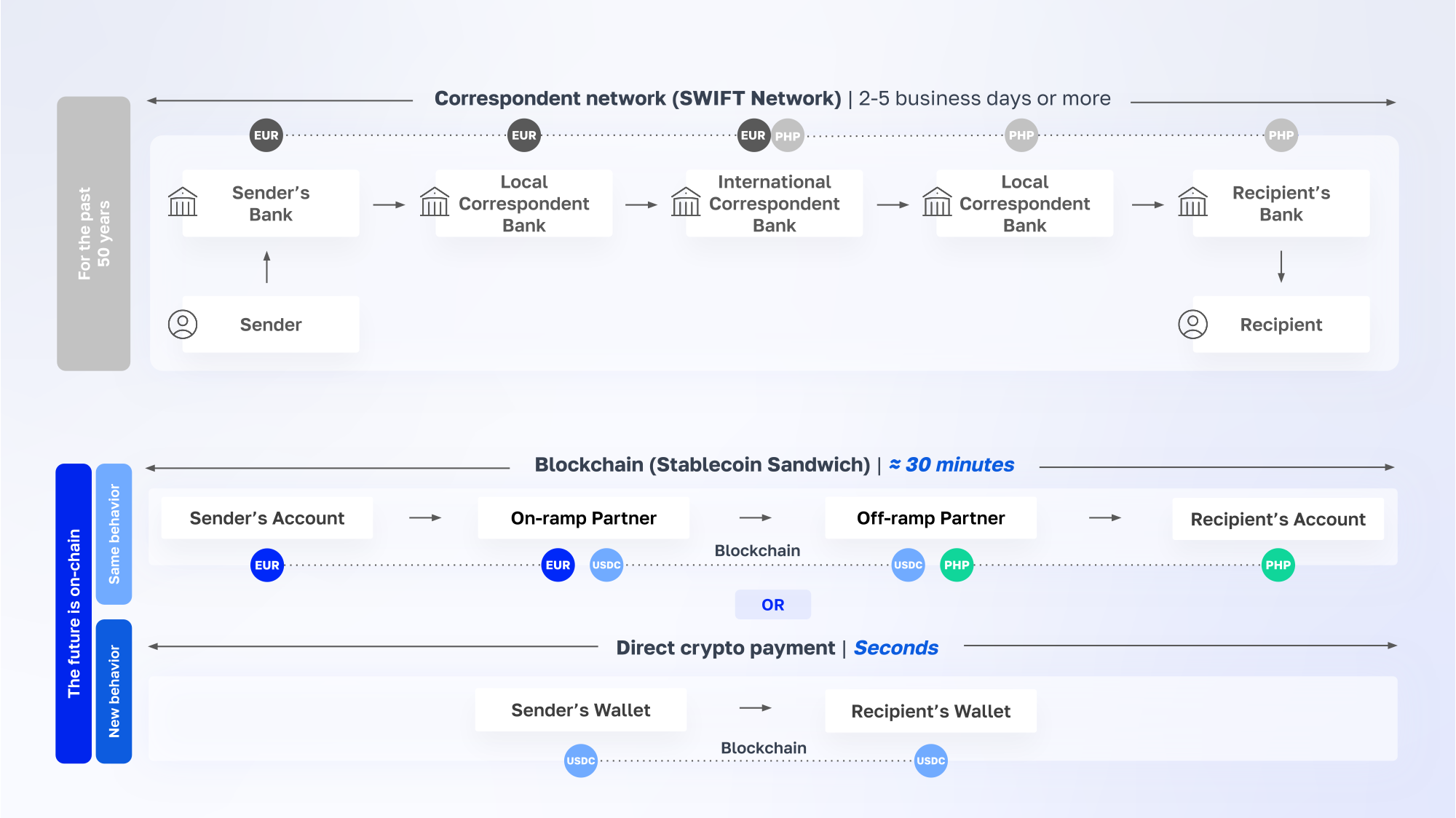
The narrative around stablecoins is undergoing a structural change. While earlier cycles were defined by speculative trading and crypto-to-crypto arbitrage, 2026 marks a pivot toward real-world utility. Institutional adoption, supported by clearer regulatory frameworks, is driving stablecoin flows from exchange wallets into broader financial infrastructure. This transition reduces reliance on traditional correspondent banking and positions digital dollars as a settlement layer for global commerce.
Historical data shows that a significant majority of stablecoin volume was previously tied to cryptocurrency trading. Deutsche Bank’s 2026 outlook notes that around 85% to 90% of stablecoin usage was historically linked to crypto markets, often due to restrictions on direct fiat investment in certain jurisdictions. However, as regulatory clarity improves in major economies, this dynamic is shifting. Institutions are now integrating stablecoins for treasury management, cross-border payroll, and supply chain payments, moving beyond the speculative margins that once dominated the sector.
The acceleration of transaction volume in 2026 reflects this deeper integration. Real-world adoption metrics indicate that stablecoins are increasingly used for high-value, low-frequency transfers rather than high-frequency retail speculation. This change in behavior stabilizes the ecosystem and aligns stablecoin flows with traditional financial goals: efficiency, transparency, and lower friction. As banks and fintechs build native support for digital settlements, the distinction between "crypto" and "finance" continues to blur.
USDC vs USDT market share 2026
The stablecoin duopoly has solidified into two distinct lanes. Tether (USDT) retains its crown as the dominant asset for crypto trading, while USD Coin (USDC) has carved out a stronger foothold in institutional and regulatory-compliant flows. Understanding this split is essential for navigating 2026 liquidity.
Tether’s market cap remains larger, driven by its deep integration into global crypto exchanges and its utility as the primary pair for trading altcoins. However, USDC is gaining ground in sectors where transparency and regulatory adherence are non-negotiable. As Deutsche Bank notes, the vast majority of stablecoins are still used for crypto trading, but the type of trader is shifting toward institutional players who demand higher compliance standards.
The table below contrasts the two giants across key metrics that matter to institutional adoption.
| Metric | USDT | USDC |
|---|---|---|
| Primary Use Case | Crypto trading pairs | Institutional & cross-border payments |
| Regulatory Focus | Global exchange liquidity | US regulatory compliance |
| Reserve Transparency | Audited attestations | Monthly attestations & regulatory reporting |
| Market Cap Rank | #1 | #2 |
For traders, USDT’s liquidity is unmatched. For institutions moving capital across borders, USDC’s regulatory clarity reduces friction. The choice depends on whether you are trading or transferring.
Cross-border payments crypto: Real-world utility
The conversation around stablecoins has shifted from theoretical potential to operational reality in 2026. While the narrative once focused on speculative trading, the current emphasis is on utility. Stablecoins are now functioning as a practical mechanism for moving liquidity across borders, offering speed and transparency that traditional banking rails often lack.
Despite this operational maturity, stablecoins remain a niche segment of the global financial system. According to the 2026 Cross-Border Payments Report by Openfx, stablecoins account for just 1% of total global payment flows. This figure has remained stubbornly unchanged from 2023 and 2024, even as the absolute volume of transactions has grown significantly. The percentage reflects the sheer scale of traditional fiat transfers, but the growth in absolute terms indicates a steady, if gradual, adoption curve.
This modest share is largely due to the complexity of integrating stablecoins into existing business-to-business (B2B) and remittance infrastructure. For many enterprises, the transition requires more than just holding digital assets; it demands robust compliance frameworks, liquidity management, and integration with legacy accounting systems. However, for specific use cases—such as high-volume B2B trade finance or cross-border remittances where speed is critical—the value proposition is clear.
The infrastructure supporting these payments is evolving rapidly. McKinsey’s analysis of tokenized cash highlights how stablecoins enable next-generation payments by reducing settlement times from days to seconds. This efficiency is particularly valuable for supply chain finance, where working capital is often tied up in transit. By using stablecoins, companies can settle invoices instantly, freeing up liquidity that would otherwise be trapped in the banking system.
In the remittance sector, the impact is equally significant. Traditional wire transfers often involve multiple intermediaries, each taking a cut and adding delay. Stablecoins bypass many of these intermediaries, allowing for direct peer-to-peer transfers. While regulatory hurdles remain a concern, the trend is toward greater acceptance rather than rejection. As more financial institutions build the necessary bridges between fiat and crypto, the 1% share of global flows is likely to grow, driven by the tangible benefits of speed and cost reduction.
Regulation reshaping stablecoin flows 2026
Global regulatory frameworks are no longer theoretical; they are actively redirecting institutional capital. With the European Union’s Markets in Crypto-Assets (MiCA) regulation fully enforced and the United States advancing its own compliance standards, the barrier to entry for institutional stablecoin adoption has shifted from technological to legal.
This regulatory clarity is forcing a consolidation of flow patterns. Large financial institutions are migrating away from unregulated or loosely regulated assets toward compliant issuers who can provide the necessary audit trails and reserve transparency. As noted by The Payments Association, these new rules are accelerating adoption while simultaneously shaping demand for underlying US debt instruments held in reserve.
However, this shift introduces new systemic risks. Stripe warns that large-scale migration of funds into compliant stablecoins could drain deposits from traditional banking channels, potentially concentrating liquidity within a few major issuers. This feedback loop requires careful monitoring as the industry matures.
Institutional players are now prioritizing regulatory alignment over speculative yield. This behavior is reshaping cross-border payment corridors, favoring jurisdictions with clear legal frameworks and reducing the volume of flows through unregulated offshore entities.
No comments yet. Be the first to share your thoughts!