
Stablecoin flows 2026: The institutional pivot
The narrative around stablecoin flows 2026 is shifting from retail speculation to institutional utility. While early adoption was driven by crypto-native traders seeking volatility hedges, the current landscape is defined by structural integration into traditional finance. This transition is no longer theoretical; it is being executed through real-world asset (RWA) tokenization and clearer regulatory frameworks that reduce compliance friction for large-scale capital deployment.
Data from payment infrastructure providers confirms this acceleration. BVNK reports that stablecoin holdings are rising rapidly, with half of holders increasing their positions over the last 12 months. More significantly, 56% plan to acquire more in the near term, indicating sustained demand rather than transient speculation. This behavioral shift suggests that stablecoins are becoming a standard settlement layer for businesses rather than a speculative vehicle.
The scale of these flows is becoming evident in transaction volumes. According to ZeroHash’s 2026 Stablecoin Momentum Report, active usage grew 146% year over year, while transaction volume surged by 690%. This disparity—where volume grows much faster than active user counts—signals a move toward higher-value, institutional-grade financial flows. These are not small retail transfers; they are enterprise-level payments and treasury operations.
To visualize this stability and volume trend, we can look at the broader market activity of the largest stablecoins. The following chart illustrates the volume dynamics for Tether (USDT), the dominant stablecoin by market cap, over the last 12 months.
This institutional pivot is underpinned by the tokenization of real-world assets. As bonds, real estate, and private credit move on-chain, stablecoins serve as the necessary liquidity backbone. Regulatory clarity further enables this by providing the legal certainty required for banks and asset managers to participate. The result is a market where stablecoin flows are increasingly synonymous with global payment efficiency and asset liquidity.
RWA tokenization trends fueling liquidity
The narrative around stablecoins is shifting from speculative store-of-value to essential settlement infrastructure. Real World Asset (RWA) tokenization is driving this change by creating a tangible demand for digital dollars as the backbone of on-chain transactions. As traditional assets move onto the blockchain, they require a stable, efficient medium of exchange to settle trades, manage liquidity, and execute cross-border payments without the friction of legacy banking rails.
This structural shift is evident in the behavior of market participants. According to BVNK’s 2026 Utility Report, half of stablecoin holders increased their holdings over the last twelve months, with 56% planning to acquire more. This surge is not driven by short-term speculation but by the need to hold stable liquidity for operational purposes within tokenized asset ecosystems. When real estate, private credit, or commodities are tokenized, the resulting capital flows rely heavily on stablecoins for speed and cost efficiency.
Half of stablecoin holders increased their holdings in the last 12 months, signaling a structural shift toward utility rather than speculation. — BVNK, Stablecoin Utility Report 2026
Regulatory frameworks are also accelerating this adoption. New global rules are reshaping how payments are processed, forcing institutions to adopt compliant, transparent settlement layers. The pressure to finalize frameworks, such as those in the UK, is pushing traditional finance toward stablecoin integration as a means to manage US debt exposure and streamline cross-border flows. This regulatory clarity reduces counterparty risk, making stablecoins a viable option for institutional capital allocation.
The integration of RWAs and stablecoins creates a self-reinforcing loop. As more assets are tokenized, the demand for stable settlement layers grows. In turn, the increased volume of stablecoin transactions enhances their liquidity and stability, making them even more attractive for institutional use. This dynamic is reshaping the financial landscape, moving stablecoins from the periphery of crypto speculation to the center of global asset management.
Cross-border payments and B2B utility
The narrative around stablecoin flows in 2026 has shifted from speculative interest to operational necessity. As noted by Forbes, the industry is moving from theory to practice, with stablecoins increasingly functioning as critical payments infrastructure for B2B flows and treasury operations [[src-serp-3]][[src-serp-7]]. This transition is driven by the need for speed and transparency in global commerce, where traditional banking rails often introduce unnecessary friction and delay.
For multinational enterprises, the primary value proposition is liquidity management. Stablecoins allow businesses to move capital across borders in minutes rather than days, reducing the capital tied up in correspondent banking relationships. This efficiency is particularly valuable for supply chain finance, where rapid settlement can improve working capital cycles and reduce counterparty risk.
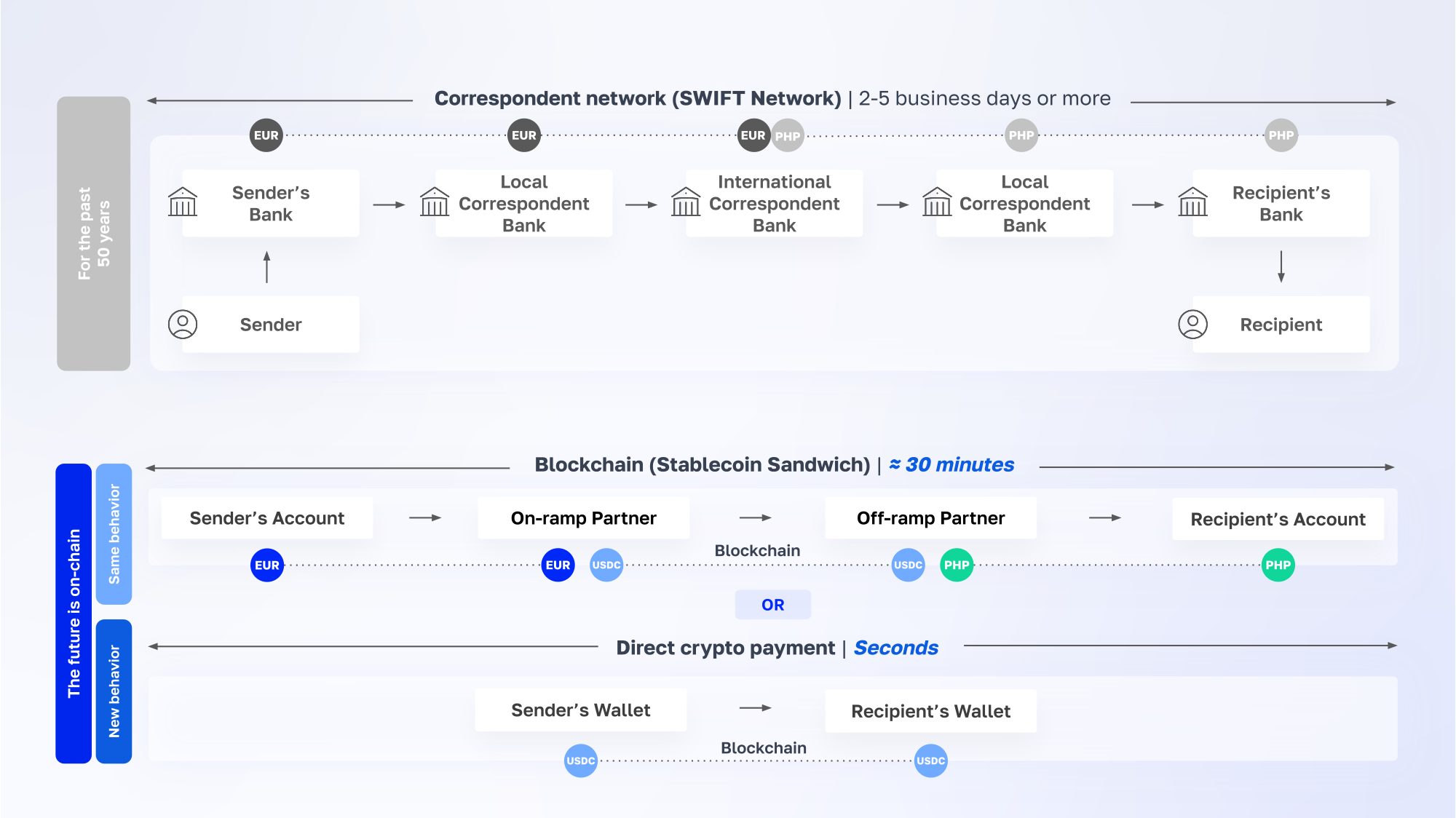
The following comparison highlights the structural differences between traditional SWIFT settlement and stablecoin-based B2B payments. This data reflects the current operational reality for institutions adopting stablecoin flows in 2026.
| Metric | Traditional SWIFT | Stablecoin (USDC/USDT) |
|---|---|---|
| Settlement Time | 1-5 Business Days | Seconds to Minutes |
| Cost Per Transaction | $15-$50+ | $0.01-$0.10 |
| Transparency | Limited (Opaque intermediaries) | High (On-chain visibility) |
| Availability | Business Hours Only | 24/7/365 |
| Reconciliation | Manual or Batched | Real-time |
While the cost and speed advantages are clear, the adoption of stablecoin flows in 2026 is heavily influenced by regulatory clarity. Institutions are prioritizing compliant, regulated stablecoins to mitigate counterparty and regulatory risks. This shift towards utility-focused adoption is reshaping the global payments landscape, making stablecoins a viable alternative for high-volume B2B transactions.
Regulatory frameworks and market risks
The trajectory of stablecoin flows in 2026 is no longer driven solely by speculative demand; it is being shaped by the rapid implementation of global regulatory frameworks. As major jurisdictions finalize their rules, the market is shifting from a period of experimentation to one of institutional compliance. This transition is accelerating adoption among traditional finance players who require legal certainty, but it also introduces new structural pressures on the broader banking system.
New regulations are effectively reshaping the demand for short-term US debt, as stablecoin issuers are increasingly required to hold high-quality liquid assets to back their tokens. This creates a direct link between crypto market growth and traditional treasury markets. According to recent analysis by The Payments Association, these evolving rules are not just compliance hurdles but are actively driving institutional participation by standardizing reserve requirements [1].
However, this integration carries significant systemic risks. Large-scale stablecoin adoption has the potential to shift deposits away from traditional banks, concentrating liquidity in a few non-bank financial institutions. Stripe has highlighted that this shift could create feedback loops where a loss of confidence in a major stablecoin issuer triggers broader banking stress [2]. The concentration of reserves means that the health of the stablecoin market is now inextricably linked to the stability of the traditional banking sector.
To monitor these dynamics, it is essential to track the real-time performance of major stablecoins and the broader crypto market, as they often serve as leading indicators for institutional capital flows.
Key takeaways for institutional adoption
Stablecoin flows in 2026 are shifting from speculative trading vehicles to foundational payments infrastructure. For financial institutions, this transition offers tangible efficiency gains in B2B settlements and treasury operations, but it requires rigorous structural preparation. The following steps outline the essential criteria for evaluating stablecoin integration.
Before integrating stablecoins, institutions must map their operations against evolving regulatory standards. Focus on jurisdictions with clear legal frameworks for digital assets and ensure your stablecoin issuers maintain transparent reserve audits. Compliance is no longer optional; it is the gatekeeper for institutional capital entry.
Evaluate the liquidity pools of your target stablecoins across major exchanges and OTC desks. Institutional-grade integration requires deep order books to handle large transaction volumes without significant slippage. Additionally, verify settlement finality times to ensure they meet your treasury’s operational requirements for real-time or near-real-time processing.
Seamless integration with legacy treasury management systems (TMS) and enterprise resource planning (ERP) tools is critical. Look for providers that offer robust APIs and middleware solutions to bridge blockchain data with traditional accounting ledgers. This reduces manual reconciliation errors and provides the audit trails necessary for internal and external reporting.
The path to adopting stablecoin flows 2026 requires balancing innovation with caution. By prioritizing regulatory clarity, liquidity, and system integration, institutions can harness the efficiency of digital assets while maintaining the stability expected by stakeholders.
Frequently asked questions about stablecoin flows
What is the current market share of stablecoins in global payments?
Despite explosive growth in absolute transaction volume, stablecoins remain a small fraction of the broader financial system. According to the 2026 Openfx cross-border payments report, stablecoins hold just 1% of global payment flows. This share has remained stubbornly unchanged since 2023 and 2024, indicating that while adoption is accelerating, structural integration into traditional banking rails is still in its early stages.
How do regulatory changes affect stablecoin flows in 2026?
Regulatory clarity is the primary driver of institutional inflows into real-world asset (RWA) tokenization. The 2026 landscape is defined by stricter compliance requirements rather than open access. Institutions are prioritizing stablecoins that meet rigorous audit and reserve standards, effectively filtering out smaller, less transparent issuers. This regulatory pressure is reshaping market share, favoring established players with clear legal frameworks.
Are stablecoins replacing traditional remittance services?
Stablecoins are not replacing traditional remittance services but are complementing them in specific high-value corridors. For cross-border B2B payments, they offer speed and transparency that legacy systems lack. However, for consumer remittances, the 1% market share suggests that traditional banks and payment processors still dominate due to familiarity and existing infrastructure. Stablecoins are carving out a niche for institutional and high-volume transactions rather than mass consumer adoption.
No comments yet. Be the first to share your thoughts!