
Institutional stablecoin adoption accelerates
The narrative around stablecoins is shifting from retail speculation to institutional infrastructure. In 2026, enterprise adoption is no longer a projection; it is the dominant flow of capital. This transition is driven by the need for efficient treasury management and cross-border payment rails that traditional banking systems struggle to match in speed and cost.
Data from payment processors confirms this structural change. ZeroHash reported a 146% year-over-year increase in active stablecoin usage, with transaction volume surging by 690%. These figures indicate that stablecoins are moving beyond small-ticket transactions into higher-value financial flows, serving as a primary vehicle for corporate liquidity.
This institutionalization is reshaping how companies view digital assets. Rather than treating stablecoins as speculative holdings, enterprises are integrating them into core treasury operations. The result is a market where stability and utility outweigh volatility, creating a robust foundation for global commerce.
Treasury yields and USDC demand
Stablecoin issuers operate as silent participants in the US debt market. When users purchase USDC, the issuer does not hold the cash in a standard checking account. Instead, the reserves are invested in short-term US Treasuries and cash equivalents. This mechanism creates a direct link between digital currency demand and government borrowing costs.
This reserve structure transforms stablecoins into a new demand driver for US debt. As the market capitalization of USDC grows, so does the volume of Treasury bills held by the issuer. This steady, algorithmic demand provides a reliable buyer for short-term government debt, insulating it from some of the volatility seen in traditional auction markets.
The arrangement functions like a modernized money market fund, but with greater speed and transparency. Issuers must maintain 100% backing for every token in circulation, meaning their treasury holdings must match their outstanding supply. This regulatory requirement ensures that the demand for US Treasuries remains tied directly to the utility and adoption of the stablecoin.
For institutional investors, this dynamic introduces a new variable in yield analysis. The flow of capital into stablecoins now influences the liquidity of the short-end of the Treasury curve. As global payments infrastructure increasingly relies on these digital assets, the volume of Treasuries held by issuers represents a significant, though often overlooked, component of fixed-income demand.
Cross-border payments and settlement
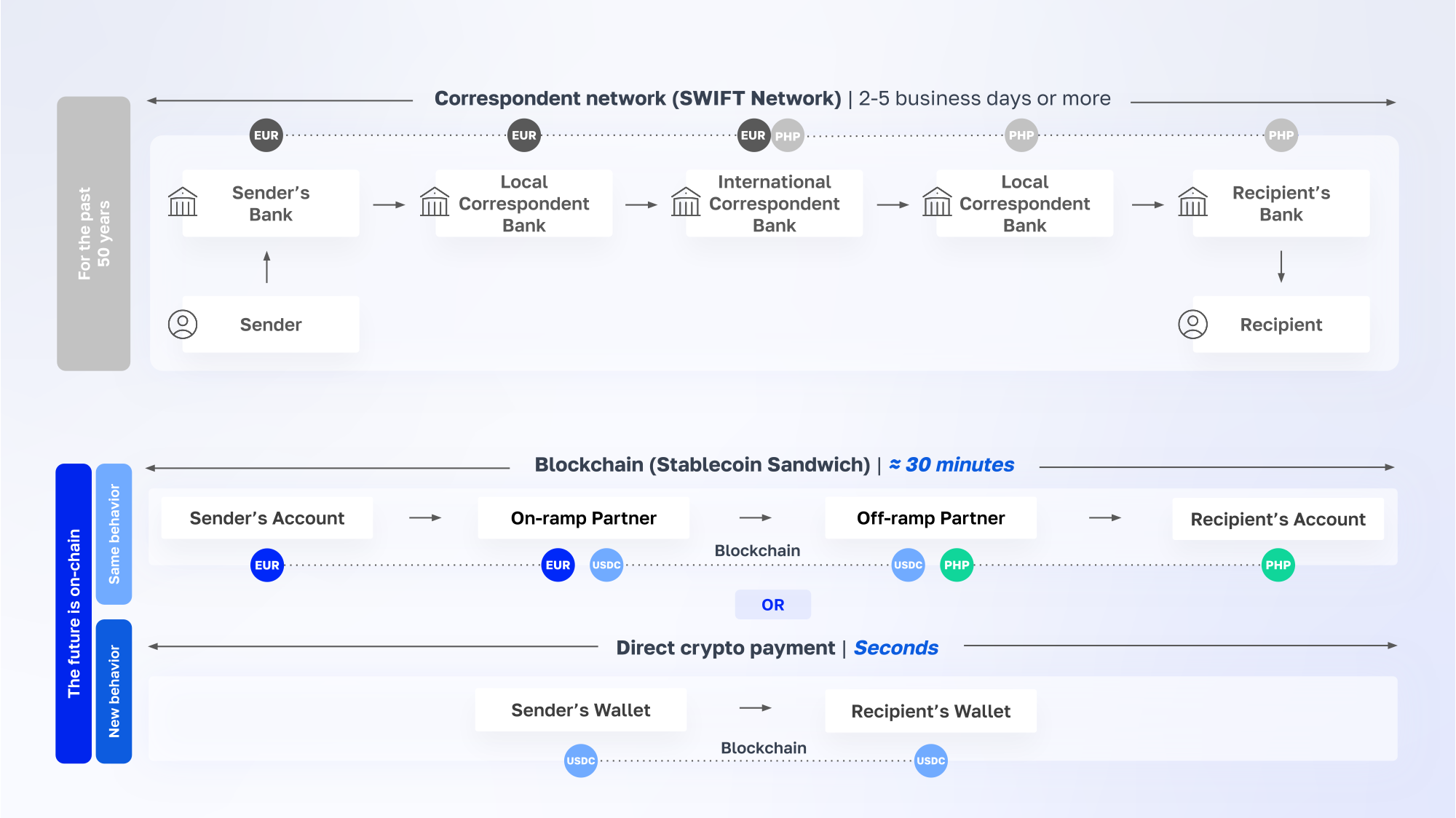
Stablecoins are moving from experimental pilots to the core infrastructure of B2B cross-border transactions. In 2026, the focus has shifted decisively from theoretical potential to practical execution, as enterprises seek to replace legacy SWIFT rails that often suffer from delayed settlement and opaque fee structures. By leveraging blockchain networks, companies can now execute transactions in minutes rather than days, significantly reducing the friction inherent in traditional international banking.
Despite this operational shift, stablecoins still represent approximately 1% of global payment flows, a figure that has remained stubbornly unchanged since 2023. This static percentage masks explosive growth in absolute volume. As regulatory frameworks tighten and compliance standards mature, stablecoins are becoming a reliable tool for moving liquidity across borders, offering speed and cost efficiency that traditional correspondent banking struggles to match.
The adoption of stablecoins for settlement is particularly evident in sectors with high transaction volumes and tight margins. By bypassing multiple intermediary banks, businesses can retain more capital and reduce reconciliation overhead. This trend is not merely about technological novelty; it is a strategic response to the inefficiencies of the current financial system, positioning stablecoins as a critical component of modern treasury management.
Regulatory frameworks and compliance
The 2026 regulatory landscape has shifted from experimental oversight to structured enforcement, creating a clear divide between compliant institutional flows and fragmented retail activity. Global stablecoin rules are accelerating adoption by establishing baseline standards for reserve backing and issuance, which in turn shapes demand for US debt instruments and pressures jurisdictions like the UK to finalise their own frameworks. This harmonization is critical; it transforms stablecoins from speculative assets into recognized settlement layers that institutional treasuries can integrate with confidence.
In the United States, the focus remains on strict adherence to existing anti-money laundering (AML) and know-your-customer (KYC) mandates, supplemented by emerging guidance from the OCC and FDIC regarding bank custody of digital assets. The UK, meanwhile, is moving toward a statutory regime under the Financial Services and Markets Act 2023, aiming to provide legal certainty for e-money tokens. For institutions, this means compliance is no longer optional—it is the primary driver of liquidity access. Without robust verification, multisig approvals, audits, and continuous wallet monitoring, stablecoin flows cannot be treated as sensitive financial processes, effectively locking out traditional capital.
The result is a market where regulatory clarity directly correlates with treasury yield efficiency. Institutions that align with these frameworks gain access to deeper liquidity pools and lower counterparty risk, while those lagging face operational friction and potential exclusion from major payment rails. As global rules continue to reshape payments, the ability to navigate these compliance requirements becomes a core competency for any entity managing stablecoin reserves.
Key questions on stablecoin liquidity
Institutional adoption of stablecoins has shifted from experimental pilots to core treasury operations, with active usage growing 146% year-over-year on major platforms [[src-serp-5]]. This surge brings specific regulatory and operational questions to the forefront for financial officers and compliance teams managing cross-border liquidity.
Are stablecoin reserves fully backed?
Regulatory frameworks in 2026 increasingly mandate transparent reserve structures, typically requiring 1:1 backing with high-quality liquid assets like US Treasuries. While most major issuers comply, institutional treasuries must verify the specific composition of reserves and the audit frequency of the custodian. The shift from theory to practice means that reserve transparency is now a baseline requirement for cross-border payments [[src-serp-3]].
How sustainable are stablecoin yields?
Yields from stablecoin holdings are primarily derived from the interest generated by the underlying reserve assets, such as short-term government debt. As new global rules accelerate adoption and shape demand for US debt, the yield environment remains tied to broader monetary policy. Institutions should model yields based on current treasury rates rather than speculative DeFi returns [[src-serp-6]].
What are the regulatory risks for holdings?
Regulatory divergence remains the primary risk. While global standards are accelerating, the UK and other jurisdictions are still finalizing their frameworks, creating potential compliance gaps for multi-jurisdictional treasuries [[src-serp-6]]. Institutions must treat stablecoin flows with the same verification, multisig approvals, and audit rigor as traditional sensitive financial processes [[src-serp-2]].
How do I monitor stablecoin liquidity?
Effective liquidity management requires real-time wallet monitoring and transaction volume analysis. With transaction volumes increasing by 690% in some sectors, manual tracking is insufficient. Institutional treasuries should implement automated monitoring tools that flag anomalies and ensure compliance with emerging reporting standards [[src-serp-5]].
No comments yet. Be the first to share your thoughts!