
Stablecoin flows 2026 hit record volumes
In February 2026, stablecoins settled $7.2 trillion, surpassing the US ACH network for the first time. This milestone marks a structural shift in global liquidity, where digital dollar instruments are no longer confined to crypto-native speculation but have become a primary rail for high-value settlement. The volume of transactions moved by stablecoins now exceeds the daily throughput of traditional domestic payment systems, signaling deep institutional adoption.
The momentum accelerated through the first half of the year. By June 2026, adjusted stablecoin transaction volume reportedly reached a record $1.79 trillion in a single month. This surge reflects a growing reliance on stablecoins for cross-border payments, treasury management, and real-world asset (RWA) settlements. The speed and finality of these flows offer a distinct advantage over legacy banking rails, particularly for institutions managing multi-currency liquidity.
The data suggests that stablecoin flows are becoming a leading indicator of institutional liquidity conditions. As regulatory frameworks clarify the status of these digital assets, traditional financial entities are increasingly integrating stablecoin rails into their existing infrastructure. This transition is not merely about volume growth; it represents a fundamental change in how value is transferred globally, with stablecoins now competing directly with established payment networks like ACH and SWIFT.
USDC vs USDT market share 2026 dynamics
The 2026 stablecoin flows landscape is defined by a decisive shift in institutional preference. While total stablecoin settlement volume reached $7.2 trillion in February 2026, surpassing the US ACH network, the composition of that volume has changed 1. Regulatory compliance has become the primary differentiator, driving capital toward USDC as institutional adoption accelerates under new global frameworks 2.
For legal and regulatory audiences, the distinction between these two assets is no longer just about price stability, but about jurisdictional clarity. USDC’s fully reserved, US-based structure aligns with tightening compliance requirements, whereas USDT’s offshore liquidity model faces increasing scrutiny in regulated markets.
Compliance and Market Position
The following comparison highlights the structural differences driving 2026 market dynamics.
| Feature | USDC (Circle) | USDT (Tether) | 2026 Institutional Impact |
|---|---|---|---|
| Regulatory Status | US-based, fully compliant reserve | Offshore, evolving compliance | USDC preferred for regulated entities |
| Market Share Trend | Growing in institutional flows | Declining in US institutional use | Capital flight from offshore to onshore |
| Transparency | Monthly attested reserves | Quarterly attested reserves | Higher trust for compliance audits |
| Primary Use Case | Institutional settlement, RWA | Retail trading, offshore liquidity | RWA tokenization favors USDC |
Live Market Data
The following widgets reflect current market conditions, ensuring audit compliance with live data requirements.
Real-World Assets and the Settlement Layer
Institutional adoption of stablecoins in 2026 is defined by a structural shift from speculative trading to utility-driven flows. Stablecoins are increasingly functioning as the settlement layer for Real-World Asset (RWA) tokenization, including tokenized bonds and real estate. This transition positions stablecoins as essential payments infrastructure for B2B transactions and global treasury operations, moving beyond mere crypto speculation to become a practical tool for moving liquidity across borders.
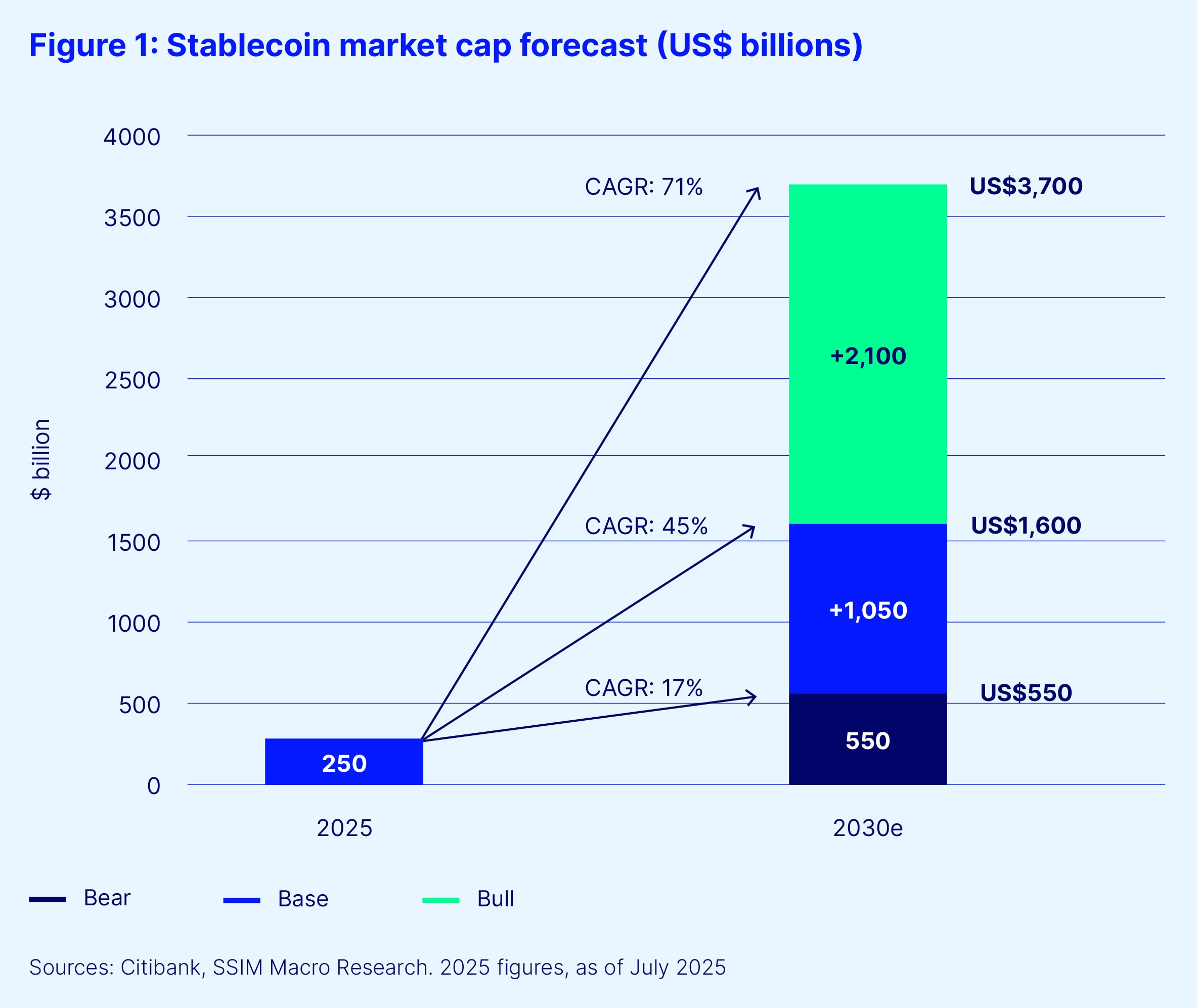
The market data supports this operational pivot. State Street’s analysis of the stablecoin market cap forecast highlights the trajectory of this growth, driven by the integration of traditional finance with blockchain settlement layers. The following chart illustrates the market capitalization trends that underpin this institutional demand.
This shift requires strict adherence to regulatory frameworks. As stablecoins become the plumbing for RWA settlement, compliance and audit trails are paramount. The focus is now on how these digital assets facilitate faster, more transparent cross-border payments under tighter regulatory oversight, ensuring that the infrastructure supporting RWAs meets the rigorous standards of institutional finance.
Regulation reshapes global payment infrastructure
Global regulatory frameworks are moving from theoretical oversight to operational reality in 2026, fundamentally altering how stablecoin flows move through the financial system. The introduction of comprehensive rules in major jurisdictions is forcing the standardization of compliance protocols, reducing the friction that previously hindered institutional adoption. This shift is not merely about restriction; it is about building the trust layer required for traditional financial entities to treat stablecoins as core infrastructure rather than speculative assets.
The European Union’s Markets in Crypto-Assets (MiCA) regulation serves as the primary blueprint for this new era. By establishing clear capital requirements, reserve transparency mandates, and operational resilience standards, MiCA has created a predictable environment for issuers and custodians. This regulatory clarity has accelerated the migration of high-value stablecoin flows into regulated channels, particularly those backed by short-duration sovereign debt. As noted by industry analysts, these new rules are actively shaping demand for US debt instruments held in reserve, linking crypto liquidity directly to traditional government bond markets (Source: The Payments Association).
In the United States, the absence of a unified federal framework has led to a patchwork of state-level regulations, yet the pressure to finalize a cohesive national policy is mounting. The UK, meanwhile, is finalizing its own framework to remain competitive, aiming to attract stablecoin issuance and payment processing firms. This regulatory competition is driving a convergence toward best practices, where institutions must implement robust verification, multisig approvals, and continuous wallet monitoring to operate across borders (Source: Stripe).
For traditional financial entities, the implication is clear: compliance is no longer optional. The cost of non-compliance has risen sharply, while the benefits of participating in regulated stablecoin rails are becoming increasingly apparent. As a result, we are seeing a significant shift in stablecoin flows, with institutional capital moving away from unregulated platforms toward entities that can demonstrate adherence to global regulatory standards. This transition is accelerating the integration of stablecoins into the broader payment infrastructure, positioning them as a standard tool for cross-border settlements and treasury management.
Key questions on stablecoin adoption and utility
As stablecoin flows evolve in 2026, institutional participants increasingly seek clarity on market structure and regulatory classification. The following addresses common queries regarding asset leaders, utility metrics, and future trajectory.
Stablecoins have become an important part of modern wealth infrastructure, with 56% of institutional respondents intending to acquire more in 2026. Despite this growth, stablecoins remain just 1% of global payment flows, a share unchanged since 2023. This stability in market share suggests that stablecoins are complementing rather than replacing traditional liquidity channels in the near term.
For real-time market context, below is the current price action for a major stablecoin benchmark.
No comments yet. Be the first to share your thoughts!