
The shift to agentic settlement
The architecture of cross-border payments is undergoing a structural pivot from human-centric interfaces to machine-centric infrastructure. As artificial intelligence agents gain autonomy in executing complex workflows, they require a settlement layer capable of sub-second finality, 24/7 availability, and programmable logic. Stablecoins provide this foundation, enabling autonomous entities to transact without the friction of traditional banking rails or the latency of legacy clearing systems.
This transition is not merely an efficiency upgrade; it represents a fundamental reordering of who uses programmable money. According to Forbes, stablecoins will likely power AI agents before they become commonplace for human consumers, signaling a B2B-first adoption curve driven by enterprise needs for speed and automation.
The World Economic Forum describes this pairing as a catalyst for a more intelligent era of digital finance, where AI accelerates payment intelligence and stablecoins provide the frictionless medium of exchange. This synergy allows businesses to automate treasury management, supplier payments, and compliance checks in real time, reducing operational overhead and settlement risk.
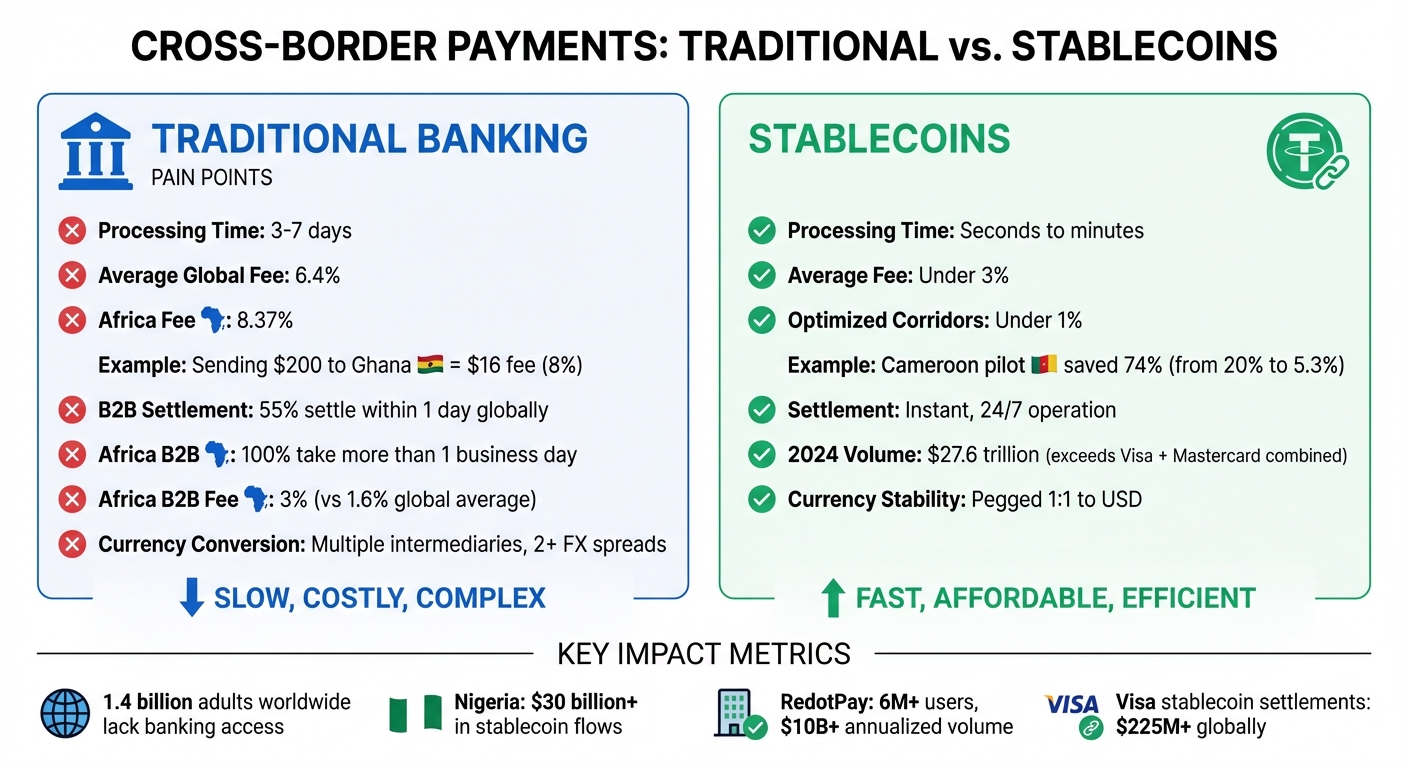
The infrastructure supporting this shift relies on blockchain networks that offer deterministic finality. Unlike traditional SWIFT transfers, which can take days and involve multiple intermediaries, on-chain settlements occur in seconds. This immediacy is critical for AI agents that operate on millisecond decision cycles, ensuring that funds are available exactly when needed for subsequent actions.
The integration of AI and stablecoins creates a closed-loop system for value transfer. AI agents can monitor market conditions, execute trades, and settle payments in stablecoins without human intervention. This automation reduces the need for manual reconciliation and minimizes the risk of human error, making it an attractive solution for high-volume B2B transactions.
Real-time stablecoin flows in action
Agentic payments represent a structural shift in how artificial intelligence systems execute financial transactions. Unlike traditional card networks that rely on batched clearing and human-initiated authorizations, stablecoin-based settlements occur on-chain through smart contracts. An AI agent signs a dollar-denominated transfer, and the network confirms the transaction in seconds rather than days. This infrastructure allows for high-frequency micropayments that are economically viable only when settlement costs approach zero.
The mechanics of this system require strict adherence to value stability. For an AI agent executing hundreds of stablecoin micropayments per hour, even a minor price swing in the underlying currency would be catastrophic to its operational budget. Consequently, these systems rely on assets pegged to fiat currencies, primarily the US dollar, to ensure predictable cost structures. The agent does not speculate on asset appreciation; it uses the stablecoin purely as a medium of exchange and a unit of account for automated service delivery.
API-driven transactions further streamline this process. AI agents interact with payment gateways programmatically, triggering transfers based on predefined logic such as data usage, compute time, or content access. This eliminates the friction of manual invoicing and reduces the overhead associated with cross-border payments. The result is a continuous flow of value that mirrors the real-time nature of digital services themselves.
Agent Wallet Infrastructure
The transition to autonomous financial operations requires a technical stack that bridges traditional banking rails with blockchain settlement layers. At the core of this architecture is wallet abstraction, which allows AI agents to hold stablecoin balances without managing private keys directly. Providers such as Circle have demonstrated how agents can leverage USDC to execute autonomous payments, creating a programmable foundation for agentic commerce.
To interact with the broader economy, these digital wallets must connect to fiat systems. Infrastructure like that offered by Crossmint enables AI agents to issue virtual cards and manage stablecoin balances via API. This integration allows an agent to hold funds in a digital wallet while simultaneously spending them at merchants that only accept traditional card networks. The result is a composable payment layer where digital assets and legacy fiat rails operate in parallel.
Selecting the right infrastructure provider depends on the specific requirements for on-ramping, API ease-of-use, and wallet support. The table below compares key players in the agentic payments space.
| Provider | Wallet Support | Fiat On-Ramp | API Ease |
|---|---|---|---|
| Crossmint | Native SDKs | Virtual Cards | High |
| Composable | Modular Modules | Direct Integration | Medium |
| Eco | Smart Accounts | Multi-Currency | High |
Institutional adoption and risk
As AI agents transition from experimental prototypes to active participants in global commerce, the infrastructure supporting their settlements must meet institutional-grade standards. The primary concern for enterprise adoption is not the speed of the blockchain, but the stability of the settlement currency. For an AI agent executing hundreds of stablecoin micropayments per hour, a 5% price swing in the underlying currency would be catastrophic, eroding operational budgets and breaking automated reconciliation processes. This requirement for absolute price stability drives the preference for regulated, fully reserved stablecoins like USDC over volatile native tokens.
Major issuers like Circle have begun building specific infrastructure to support this shift. Circle’s documentation on enabling AI agents with blockchain demonstrates how autonomous systems can leverage USDC for operational payments, highlighting the move toward programmable, compliant settlement layers. This integration allows AI systems to manage liquidity and execute transactions without the friction of traditional banking rails, provided the underlying asset maintains its peg. The reliance on such regulated issuers ensures that the settlement layer adheres to financial compliance standards, a non-negotiable factor for corporate treasuries.
Regulatory compliance remains the final gatekeeper for widespread institutional adoption. Unlike decentralized cryptocurrencies, regulated stablecoins offer the transparency required by auditors and regulators, allowing companies to integrate AI-driven payments into their existing financial reporting frameworks. As the 2026 settlement shift accelerates, the distinction between "crypto" and "finance" will blur, with regulated stablecoins serving as the neutral, compliant bridge between AI automation and global value transfer.
Checklist for Integrating Agentic Payments
Adopting stablecoin infrastructure for AI agents requires a shift from traditional credit-card rails to programmable, on-chain settlement. The following workflow helps finance leaders and developers evaluate compliance, select infrastructure, and execute test transactions.
Agentic payments involve autonomous fund movement, which triggers specific regulatory scrutiny. Consult the World Economic Forum’s framework on AI and stablecoins to ensure your architecture meets current digital asset standards before deployment.

Choose a provider that offers programmable wallets and API-driven payouts. Platforms like Crossmint or Eco allow agents to hold stablecoin balances and execute transactions without human intervention, streamlining the integration process.

Establish clear limits for agent spending. Configure smart contracts to cap transaction volumes and set daily withdrawal thresholds to prevent runaway costs or unauthorized large-scale transfers.
Run a pilot program using testnet environments. Verify that the AI agent can successfully sign transactions, settle payments via smart contracts, and handle error states without manual oversight.
For a detailed analysis of how stablecoins are reshaping these payment dynamics, refer to the latest research from Forbes on the future of agentic finance.
No comments yet. Be the first to share your thoughts!