
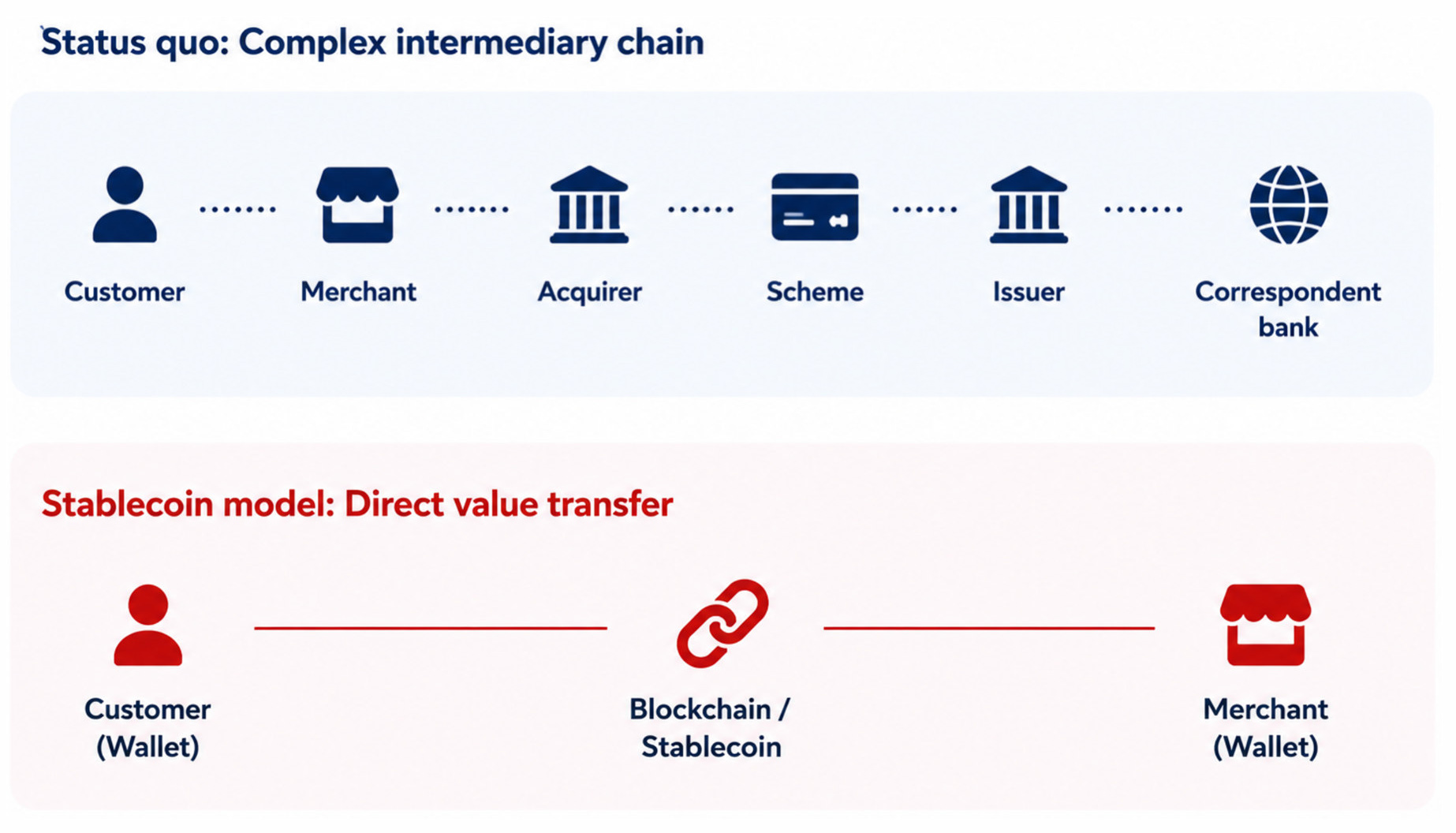
Stablecoin flows 2026
The conversation around stablecoins has shifted from theoretical potential to actual execution. In 2026, the focus is no longer on whether these assets can work, but on how they are being used to move value across borders and integrate into traditional finance. This transition marks a significant milestone for institutional DeFi adoption, driven by the dominance of major players like USDC and PYUSD.
Data from the BVNK Stablecoin Utility Report indicates that demand is accelerating. Half of stablecoin holders have increased their positions over the last year, and 56% plan to buy more in the near future. This growth is not just retail speculation; it reflects a structural change in how businesses and institutions view digital dollars as a utility for settlement and liquidity management.
The rise of USDC and PYUSD signals a maturation of the market. These assets are becoming the preferred rails for institutional flows due to their regulatory clarity and integration with traditional banking infrastructure. As stablecoin flows increase, they are effectively bridging the gap between legacy finance and decentralized networks, creating a more robust and accessible financial ecosystem.
Evaluating 2026 stablecoin choices that change the plan
The surge in USDC and PYUSD volume signals institutional adoption, but the underlying mechanics differ significantly. For treasury managers and fintech operators, the choice between these assets is no longer just about price stability; it is about regulatory clarity, liquidity depth, and operational friction.
While stablecoins now represent a larger share of on-chain value, they remain just 1% of global payment flows. This stagnation in market share masks explosive growth in absolute volume, driven largely by cross-border B2B settlements rather than retail speculation.
When selecting a stablecoin for institutional use, evaluate these four concrete factors:
| Factor | USDC | PYUSD |
|---|---|---|
| Regulatory Status | ||
| Issuer Backing | ||
| Primary Use Case | ||
| Fee Structure |
| Factor | PYUSD | USDC |
|---|---|---|
| Regulatory Status | ||
| Issuer Backing | ||
| Primary Use Case | ||
| Fee Structure |
Liquidity is the second critical tradeoff. USDC benefits from deep integration across virtually all decentralized finance protocols and centralized exchanges. PYUSD is rapidly gaining traction but remains more concentrated within the PayPal ecosystem. For institutions requiring immediate off-ramping or complex DeFi strategies, USDC’s broader market depth provides a safety buffer that PYUSD is still building.
Regulatory risk is the third factor. Both assets are designed to comply with evolving US and global frameworks, such as the FIT21 Act discussions. However, USDC has a longer track record of transparency and audit reports. PYUSD’s reliance on PayPal’s internal compliance infrastructure offers a different kind of security, but its public reserve reporting is less granular than Circle’s.
The final consideration is operational friction. If your institution already uses PayPal for payroll or merchant services, PYUSD offers seamless internal transfers with minimal friction. For cross-border payments that require interoperability with multiple banking partners and DeFi liquidity pools, USDC’s established infrastructure reduces integration time and technical debt.
How to evaluate stablecoin flows for institutional adoption
Stablecoin flows are no longer just about retail speculation. In 2026, the surge in USDC and PYUSD dominance signals a structural shift toward institutional DeFi adoption. To navigate this landscape, you need a practical framework that separates signal from noise.
1. Track net inflows to regulated exchanges
Institutional capital typically moves through regulated on-ramps before entering DeFi protocols. Monitor net inflows to major exchanges like Coinbase or Kraken. Sustained inflows often precede large-scale trading or staking activity. A spike in inflows without immediate selling pressure suggests accumulation by long-term holders rather than short-term traders.
2. Analyze issuer reserve transparency
Not all stablecoins are created equal. Institutional investors prioritize issuers with monthly attested reserves. USDC and PYUSD publish regular reports on their reserve composition. Verify that the majority of reserves are held in short-term U.S. Treasuries or cash equivalents. This transparency reduces counterparty risk and aligns with emerging regulatory expectations.
3. Compare yield opportunities across protocols
DeFi yields vary significantly between protocols. Compare the annual percentage yield (APY) for USDC and PYUSD on platforms like Aave or Compound. Consider not just the nominal yield, but also the risk profile of the underlying protocol. Higher yields often correlate with higher smart contract risk or lower liquidity. Institutional capital tends to favor protocols with proven track records and insurance funds.
4. Monitor cross-border payment volumes
Stablecoins are increasingly used for cross-border payments. Track the volume of stablecoin transfers to and from jurisdictions with high remittance costs. PYUSD and USDC are gaining traction in these corridors due to faster settlement times and lower fees compared to traditional banking. This utility drives organic demand beyond speculative trading.
5. Assess regulatory clarity and compliance
Regulatory clarity is a major driver of institutional adoption. Review the legal status of stablecoins in key markets like the U.S., EU, and Singapore. Compliance with local regulations reduces the risk of sudden bans or restrictions. Institutions are more likely to allocate capital to stablecoins that operate within clear legal frameworks.
6. Evaluate liquidity and slippage
For large transactions, liquidity is critical. Check the depth of order books for USDC and PYUSD on major decentralized exchanges. High liquidity ensures that large trades do not cause significant price slippage. Institutional investors require the ability to move capital efficiently without impacting market prices.
7. Review historical performance during stress events
Analyze how these stablecoins performed during past market downturns. Did they maintain their peg? Were there any depegging events? Historical performance provides insight into the resilience of the stablecoin’s backing and the issuer’s ability to manage crises. This due diligence is essential for risk-averse institutional investors.
How to spot weak stablecoin claims in 2026
Not every dollar moving through the blockchain signals healthy institutional adoption. As USDC and PYUSD dominate market share, it is easy to mistake volume for trust. The real signal is not how much is circulating, but where it is going and who is holding it.
Many reports highlight rising holdings as proof of success. However, half of stablecoin holders increased their positions simply to hedge against volatility, not to use them for payments. This distinction matters. If the primary driver is speculation rather than utility, the "adoption" narrative is misleading. Look for data that separates speculative hoarding from actual transactional use in cross-border payments or DeFi protocols.
Be wary of claims that ignore regulatory friction. The landscape is shifting rapidly, with new compliance requirements affecting issuers like Fidelity and Circle. A stablecoin that looks strong today may face liquidity constraints tomorrow if it fails to meet evolving legal standards. Always check the issuer's regulatory filings and reserve transparency reports. If a source cannot point to specific, audited reserves or clear legal standing, treat the claim with skepticism.
Finally, avoid conflating total supply with active circulation. A large supply does not mean the asset is being used. It might just be sitting idle in cold storage. Focus on metrics that show active usage: transaction frequency, unique addresses, and integration with real-world financial infrastructure. These are the only reliable indicators of genuine institutional DeFi adoption.
No comments yet. Be the first to share your thoughts!