
Stablecoin flows reshape institutional capital in 2026
The stablecoin market has crossed a threshold where volume outpaces speculation. While early cycles were defined by retail trading pairs and meme-driven volatility, 2026 marks a structural pivot toward institutional utility. Real-world asset (RWA) tokenization is no longer a niche experiment; it is the primary engine driving net inflows into USD-pegged digital dollars. Capital that once sat idle in traditional money market funds is now flowing into on-chain rails, seeking yield and settlement speed.
This shift is visible in the data. According to Deutsche Bank’s 2026 outlook, a significant majority of stablecoin volume still originates from crypto trading, but the velocity of these flows is changing. Institutional players are using stablecoins not just as a bridge asset, but as a settlement layer for tokenized treasuries and commercial paper. The IMF has documented how these stablecoin-based foreign exchange spillovers are increasingly influencing fiat currency markets, blurring the line between crypto and traditional forex liquidity.
The rise of yield-bearing stablecoins accelerates this transition. Users and institutions alike are demanding that digital dollars generate passive returns through tokenized Treasury exposure and on-chain lending. This demand transforms stablecoins from a static store of value into a productive financial instrument, integrating them deeper into the global capital stack.
USDC vs USDT market share 2026
The stablecoin duopoly has settled into a clear division of labor. USDT (Tether) remains the dominant asset for crypto trading volume, acting as the primary liquidity bridge between fiat and digital assets. USDC (Circle) has carved out a stronger position in institutional custody and cross-border payments, driven by its emphasis on regulatory compliance and reserve transparency. Understanding this split is essential for evaluating capital flows in 2026.
USDT’s market share is sustained by its deep integration into major exchanges and its presence across multiple blockchains. It serves as the default quote currency for most trading pairs, particularly in regions with less restrictive regulatory environments. This liquidity advantage makes it the preferred tool for traders and arbitrageurs who prioritize speed and accessibility over regulatory clarity.
USDC, by contrast, is favored by institutional investors and traditional finance entities that require strict adherence to US regulatory standards. Its reserves are held in cash and short-term US Treasuries, providing a level of auditability that appeals to corporate treasuries and asset managers. As RWA tokenization grows, USDC’s compliance-first model positions it as the backbone for institutional settlement layers.
The following table compares the core attributes of both assets as they function in the current market landscape.
| Attribute | USDC | USDT |
|---|---|---|
| Primary Use Case | Institutional Settlement & RWA | Crypto Trading Liquidity |
| Regulatory Focus | US Compliance & Transparency | Global Multi-Jurisdictional |
| Reserve Structure | Cash & Short-Term Treasuries | Diverse (Cash, Treasuries, Commercial Paper) |
| Institutional Adoption | High (Banks, Asset Managers) | Medium-High (Exchanges, Traders) |
| Market Share Trend | Steady Growth in TradFi | Dominant in Trading Volume |
This divergence reflects broader trends in digital asset adoption. While USDT continues to lead in raw transaction volume, USDC is gaining ground in areas where regulatory certainty is paramount. For institutional capital flowing into tokenized real-world assets, USDC’s infrastructure offers a more predictable environment, even if it means slightly lower liquidity in some trading pairs.
RWA tokenization trends driving capital
Real-world asset (RWA) tokenization is reshaping stablecoin demand by turning static treasury bills and private credit into on-chain settlement layers. Institutions no longer view stablecoins solely as payment rails; they are increasingly using them to hold yield-bearing collateral that settles instantly across borders.
The mechanism is straightforward. Tokenized RWAs provide a transparent, programmable layer for cash management. When institutions tokenize short-term government debt or private credit, they often settle these positions using stablecoins. This creates a dual demand: stablecoins are needed both to purchase the tokenized asset and to manage the resulting liquidity. Over half of stablecoin holders plan to acquire more in 2026, driven largely by these yield-bearing RWA products [src-serp-3].
This shift moves stablecoins from passive holding accounts into active yield instruments. Users increasingly expect digital dollars to produce passive returns through tokenized Treasury exposure and on-chain lending markets [src-serp-1]. As a result, stablecoin flows are becoming a leading indicator of institutional capital deployment into real-world markets.
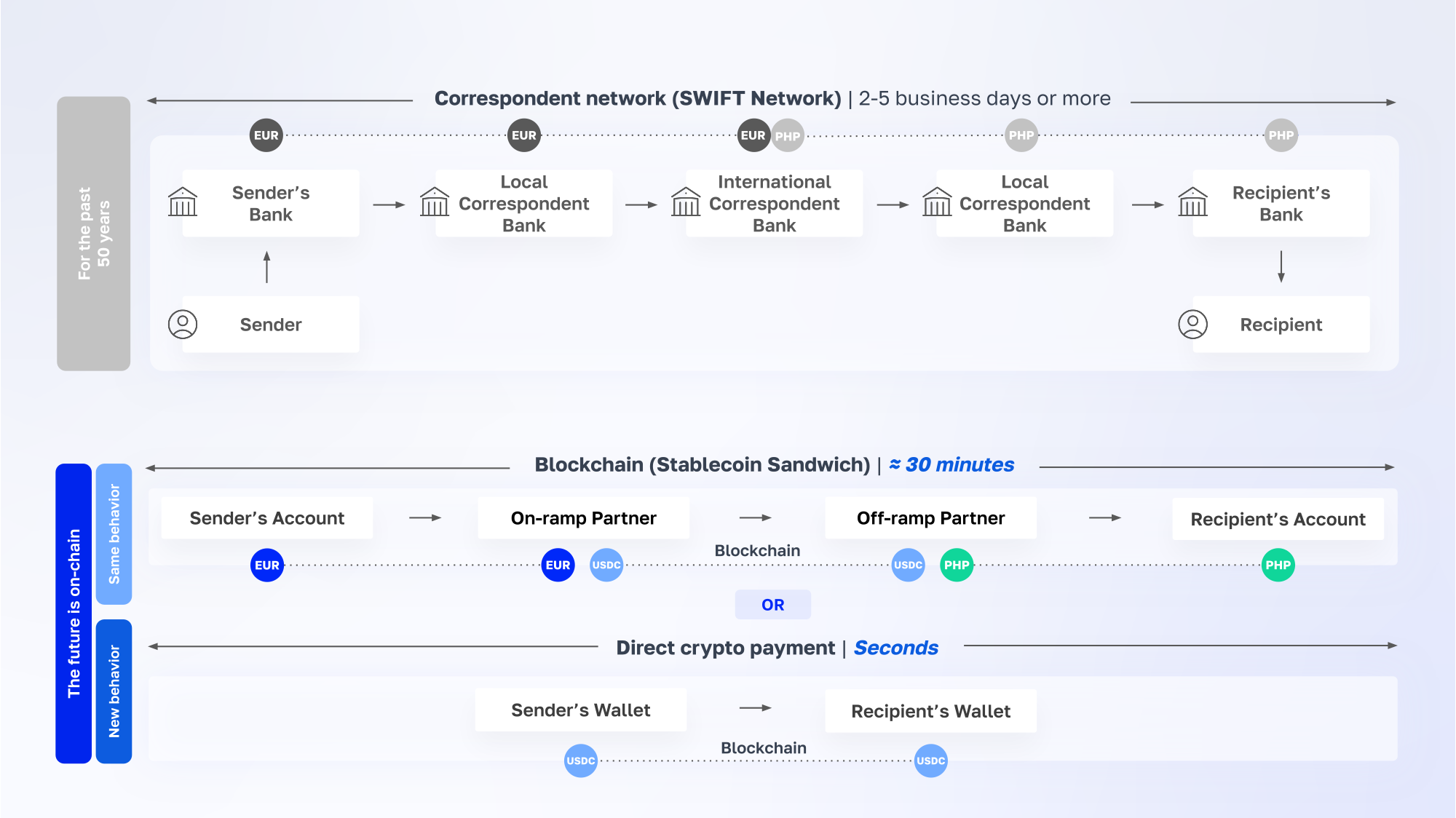
The practical application of this trend is visible in cross-border payments. Stablecoins are becoming a practical tool for moving liquidity across borders, faster and under tighter regulatory scrutiny than traditional correspondent banking [src-serp-6]. This efficiency drives further adoption, as institutions seek to minimize the time capital sits idle between settlement and yield generation.
Stablecoins reshape cross-border payments
The conversation around stablecoins has shifted from theoretical debate to practical implementation in 2026. While 2025 was defined by speculation, this year marks a decisive turn toward action, with businesses and financial institutions actively deploying digital dollars to solve persistent inefficiencies in international trade.
The economic case for stablecoin payments is now undeniable. Traditional correspondent banking networks often take days to settle transactions, charging high fees at each intermediary. Stablecoins bypass this friction, enabling near-instant settlement regardless of geography. This speed, combined with significantly lower transaction costs, addresses the core pain points that have long plagued cross-border commerce.
Regulatory clarity has been the final catalyst for this adoption. New global frameworks, including the implementation of the EU’s MiCA regulation and evolving guidelines in the UK and Asia, have provided the legal certainty institutions require. These rules are not just compliance hurdles; they are accelerating demand by standardizing how stablecoins can be held, transferred, and audited across borders.
The scale of this shift is visible in the data. Recent analysis of stablecoin flows indicates that $27.6 trillion in annual volume is now moving through these networks, representing a significant portion of the global liquidity opportunity. As regulatory tailwinds strengthen, stablecoins are becoming the default infrastructure for international payments rather than a niche alternative.
Yield-bearing stablecoins and regulatory shifts
The stablecoin landscape is moving beyond simple transactional utility. In 2026, the dominant trend is the integration of yield-generating features directly into digital dollar products. Users and institutions increasingly expect stablecoins to produce passive returns through tokenized Treasury exposure, on-chain lending markets, and institutional cash-management systems. This shift transforms stablecoins from mere payment rails into competitive money-market instruments.
This evolution is heavily influenced by new global regulatory frameworks. Recent analysis from the IMF highlights significant spillovers from stablecoin-based foreign exchange flows into fiat markets, underscoring the need for robust oversight. Simultaneously, industry bodies note that new rules are accelerating adoption while shaping demand for US debt. These regulations are pressuring jurisdictions like the UK to finalize their own frameworks, creating a more standardized but complex compliance environment.
For institutional capital, the combination of yield and regulation offers a structured path for deployment. However, it requires navigating varying regional mandates. The market is currently balancing the demand for higher returns against the imperative for regulatory clarity, a dynamic that will define the stability and utility of digital assets in the coming years.
No comments yet. Be the first to share your thoughts!