

Ethereum is flexing its muscles again, drawing in roughly $1 billion in stablecoin inflows each weekday and boosting its total stablecoin supply beyond $165 billion as of September 2025. With ETH holding steady at $3,202.77 after a 24-hour gain of and $184.08 ( and 0.0610%), this surge feels like a vote of confidence from the market. It's not just numbers; it's liquidity flooding into DeFi, signaling real momentum for Ethereum stablecoin inflows and broader adoption.
I've been tracking these flows closely, and what stands out is how Ethereum has reclaimed its throne amid shifting chain dynamics. While Tron and others handle high-volume USDT transfers, Ethereum's ecosystem thrives on sophisticated DeFi plays. Data from Artemis Terminal highlights this: average 30-day rolling adjusted stablecoin transaction volumes, stripped of MEV and CEX noise, show Ethereum leading the pack. USDC, in particular, has been the star, with its market cap climbing from $32.4 billion to $56 billion by year's end, thanks to hedge funds parking 5-20% of their assets in stablecoins.
Ethereum's Inflow Engine: Breaking Down the $1B Weekly Surge
Picture this: every weekday, about $1 billion in stablecoins pours into Ethereum, a trend that's elevated its dominance in the space. Back in June 2025, we saw $1.93 billion inflows over just seven days, spiking the network's stablecoin market cap to $124.68 billion. DEX volumes hit $984 million in 24 hours, with 426,731 active addresses buzzing, that's the kind of engagement that keeps me optimistic about Ethereum's staying power.
Why now? Institutional adoption is ramping up, and USDC is at the forefront, capturing 27% of all stablecoin trading volume. This isn't fleeting hype; it's infrastructure scaling for prime time. As a DeFi enthusiast, I see these stablecoin supply changes Artemis tracks as early indicators of deeper liquidity pools forming, ready to fuel the next wave of protocols.
Institutional players are betting big on Ethereum's settlement layer, and USDC flows are the proof.
USDC Base Flows in the Spotlight: Contrasts with Ethereum's Boom
Now, let's pivot to USDC on Base, Coinbase's Layer 2 darling. While Ethereum feasts on inflows, Base has faced headwinds, posting a net outflow of $4.3 billion this year per Artemis data, flipping last year's $3.8 billion inflow. Yet, USDC Base flows tell a nuanced story: surges in treasury mints and on-chain activity hint at maturing liquidity, even amid outflows.
Global stablecoin activity remains laser-focused on USDT and USDC across Tron and Ethereum, but Base's role in payments and DeFi is evolving. McKinsey notes stablecoin volumes topping $27 trillion cumulatively, with USDC pushing boundaries beyond crypto retail. Comparing chains, Ethereum's depth wins for complex trades, while Base offers cheaper entry points, perfect for scaling Base chain USDC liquidity. Check out deeper dives like USDC Base inflows vs Ethereum Artemis data for the full picture.
DeFi Signals Lighting Up: Liquidity and What Comes Next
These inflows aren't happening in a vacuum; they're supercharging DeFi. DEXs and lending protocols on Ethereum are humming, with stablecoin payments spanning payments, trading, and beyond. Artemis underscores USDC's edge in adoption metrics over 7D, 1M, and YTD periods. For me, this screams opportunity: more liquidity means tighter spreads, innovative yield farms, and easier on-ramps for newcomers.
Ethereum (ETH) Price Prediction 2026-2031
Forecasts driven by $1B weekly stablecoin inflows, USDC growth on Base, DeFi expansion, and market cycles (baseline: $3,203 end-2025)
| Year | Minimum Price (USD) | Average Price (USD) | Maximum Price (USD) |
|---|---|---|---|
| 2026 | $4,200 | $6,000 | $9,000 |
| 2027 | $5,500 | $8,000 | $12,000 |
| 2028 | $6,500 | $10,500 | $16,000 |
| 2029 | $8,000 | $13,000 | $21,000 |
| 2030 | $10,000 | $16,500 | $26,000 |
| 2031 | $12,500 | $20,000 | $32,000 |
Price Prediction Summary
Ethereum's dominance in stablecoin inflows ($165B+ supply) and DeFi liquidity signals strong bullish momentum. Projections show average ETH price climbing from $6,000 in 2026 (+87% YoY) to $20,000 by 2031 (+21% CAGR), with min/max reflecting bear/bull scenarios amid adoption and regulatory tailwinds.
Key Factors Affecting Ethereum Price
- Massive stablecoin inflows ($1B weekdays) boosting liquidity and TVL
- USDC surge to $56B cap and 27% trading volume share on Ethereum
- DeFi DEX volumes ($984M/24h) and 426K active addresses indicating user growth
- Institutional hedge fund allocations (5-20% NAV to stablecoins)
- Ethereum L2 scalability (e.g., Base) enhancing transaction efficiency
- Potential regulatory clarity for stablecoins and macro risk-on environment
- Competition from Solana/Tron and market cycle volatility as downside risks
Disclaimer: Cryptocurrency price predictions are speculative and based on current market analysis. Actual prices may vary significantly due to market volatility, regulatory changes, and other factors. Always do your own research before making investment decisions.
Castle Island Ventures points out the concentration on Tron and Ethereum, but Ethereum's inflows suggest it's pulling ahead in quality over quantity. Active addresses and volume spikes align with DeFi stablecoin trends, pointing to a network primed for expansion. If you're dipping toes into DeFi, now's the time to watch these flows, they're your green light for positioning.
Looking ahead, these DeFi stablecoin trends could reshape how we think about liquidity in crypto. Ethereum's ability to handle massive inflows without hiccups positions it as the go-to for serious players, while Base experiments with cost-efficient scaling.
Ethereum vs Base: USDC Flows Comparison, Market Cap Changes & DEX Volumes (Artemis Terminal 2025 Data)
| Chain | USDC/Stablecoin Flows | Market Cap / Supply | DEX Volume (24h) | DeFi Signals |
|---|---|---|---|---|
| Ethereum | $1B added each weekday (stablecoins, USDC major) 📈 $1.93B inflows (7D, June) | Stablecoins: $165B (Sep 2025) 📈 USDC total: $56B end 2025 (+$23.6B from $32.4B) | $984M 📈 | 426,731 active addresses Institutional adoption (hedge funds 5-20% NAV to stablecoins) USDC 27% of stablecoin trading volume |
| Base | Net -$4.3B outflows (YTD 2025) 📉 Stark contrast to prior $3.8B inflow | Declining 📉 | N/A | USDC adoption shaping DeFi ecosystem |
The table above lays it out clearly: Ethereum's steady gains dwarf Base's outflows, yet USDC on Base holds promise for retail and payments. Artemis data on stablecoin supply changes Artemis shows Ethereum capturing the lion's share, with USDC driving 27% of trading volume amid a global market cap that smashed past $275 billion by mid-August 2025. That's compound growth at 65% annually since 2021, folks; stablecoins aren't just surviving, they're thriving.
But let's zoom out with some history to see the trajectory.
This timeline captures the acceleration perfectly. From June's inflow blitz to September's supply milestone, it's a story of resilience. Visa's Onchain Analytics Dashboard reinforces how these public blockchain transactions are verifiable and open, fueling trust. Meanwhile, McKinsey's take on stablecoin volumes exceeding $27 trillion highlights their leap into modern finance infrastructure.
USDC's rise isn't accidental. As the internet's native currency per Quicknode insights, it's powering payments beyond crypto retail, with institutional hedge funds allocating big chunks. On Ethereum, this translates to deeper liquidity pools and innovative protocols. Base, despite $4.3 billion outflows, sees USDC mints signaling treasury integrations and DeFi experimentation. For comparison, dive into USDC on Base chain inflows surge trends.
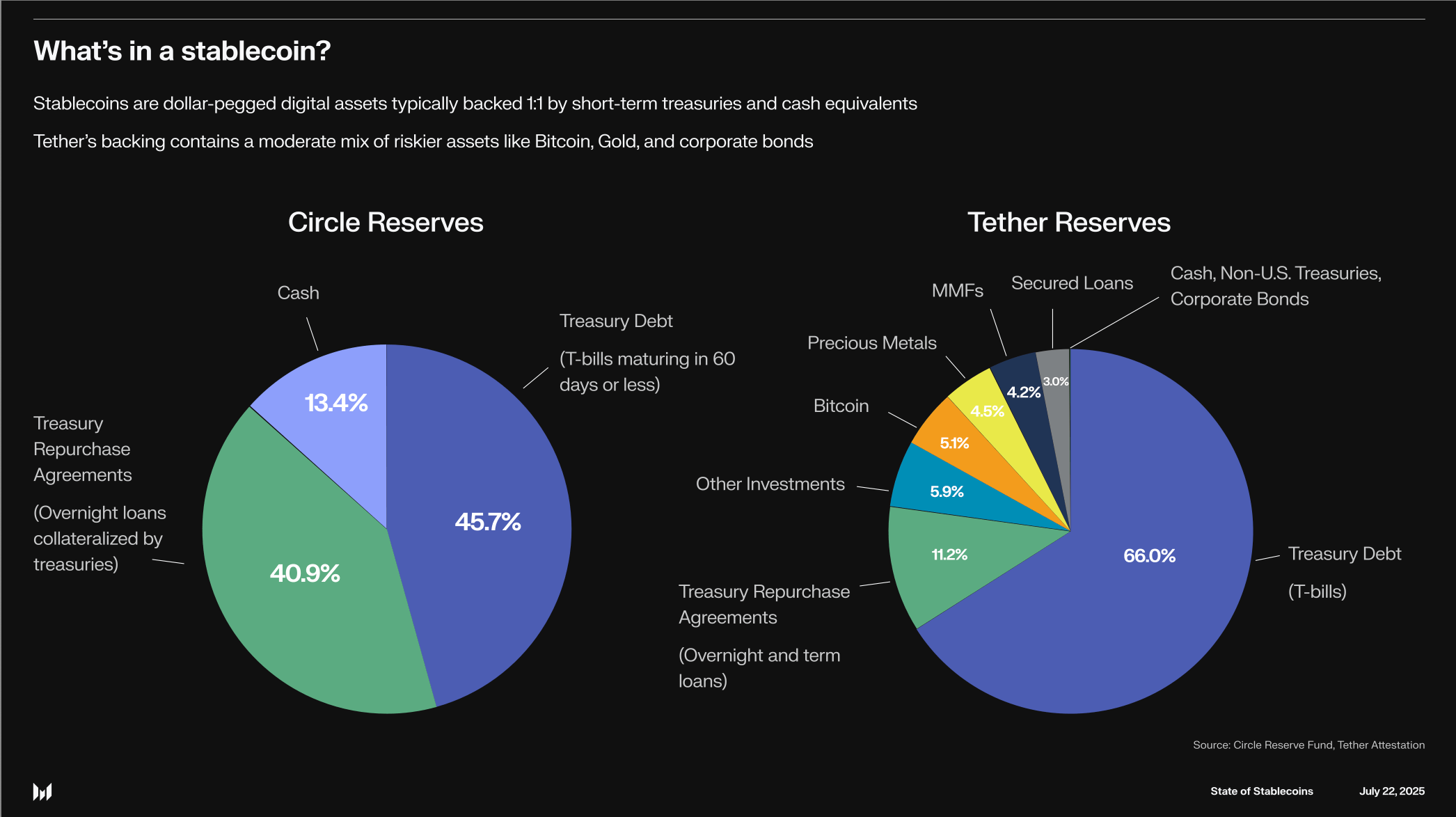
What excites me most? The DeFi signals. With ETH at $3,202.77, up $184.08 in 24 hours, these inflows correlate with active addresses soaring past 426,000. Lending platforms and DEXs are liquidity magnets, tightening spreads and unlocking yields newcomers can actually chase.
Castle Island Ventures nails it: activity clusters on USDT and USDC via Tron and Ethereum, but Ethereum's edge lies in quality DeFi engagement. Even Artemis's January update, noting USDT's volume dominance, can't overshadow USDC's demand surge, with users paying premiums to escape fiat rails like PayPal.
For investors and enthusiasts, this is your cue. Track Ethereum stablecoin inflows as leading indicators; they're the pulse of market shifts. USDC Base flows, though challenged, offer Layer 2 efficiency for everyday use. Whether you're yield farming or hedging, Ethereum's $165 billion stablecoin war chest means opportunities abound. Dive in, stay informed via platforms like ours, and ride this wave. The DeFi ecosystem is more accessible than ever, and with these flows, it's primed for your next move.




No comments yet. Be the first to share your thoughts!