

In the volatile landscape of Layer 1 blockchains, where Sui's native token trades at $0.9332 after a modest 0.8140% dip over the past 24 hours, one metric stands out as a beacon of resilience: stablecoin flows. Year-to-date, Sui has clocked an astonishing $1.6 trillion in stablecoin transfers, eclipsing rivals Polygon and Avalanche. This surge underscores growing stablecoin adoption in Sui DeFi, signaling capital rotation toward networks primed for scale amid broader market caution.
While Sui, Avalanche, and TON grappled with sharp drawdowns in 2025, driven by investor wariness over shifting capital, Sui's stablecoin volume on Sui network tells a different story. Stablecoin supply on Sui hit an all-time high near $918 million, a 148% climb since early 2025. November alone saw $168.8 billion in transfers, per on-chain analytics, highlighting a gap widening against competitors.
Sui's stablecoin supply is up 148% to $918 million since the beginning of 2025, and the network's token, SUI, has been one of the strongest altcoins throughout.
Decoding Sui's Stablecoin Dominance Over Polygon and Avalanche
When stacking up Sui vs Polygon Avalanche stablecoins, the data paints Sui as the frontrunner. Polygon's ecosystem, long a DeFi staple, has seen stablecoin activity stagnate amid scalability hiccups, while Avalanche's subnets struggle to consolidate flows. Sui, however, processed massive inflows last week alongside Aptos and Solana, cementing its spot among top chains for Sui stablecoin transfers YTD.

This isn't mere hype. Sui's Total Value Locked ballooned past $1.75 billion by mid-2025, vaulting it ahead of Polygon and Optimism in rankings. USDC integrations and protocols like DeepBook have funneled stablecoins into lending, DEXs, and yield farms, fostering a flywheel effect. In contrast, Polygon's zkEVM transition diluted focus, and Avalanche's tokenomics faced dilution pressures, muting their stablecoin momentum.
Technology as the Catalyst for Sui Stablecoin Flows
Sui's architecture, built on the Move programming language, positions it as a potential Solana-killer with blistering speed and low costs. Grayscale notes its competition with high-throughput peers like Solana and Ethereum for fee revenue, but Sui's object-centric model enables parallel execution, ideal for stablecoin-heavy DeFi. This tech edge drives sui stablecoin flows, as traders seek frictionless swaps and perpetuals without the congestion plaguing others.
Consider the broader stablecoin landscape: over $300 billion distributed across Ethereum, Solana, Tron, and emergents like Sui. CoinGecko's Q1 2025 report credits USDC's $16.1 billion market cap addition as a tailwind, with Sui capturing disproportionate share. As capital flees underperformers, Sui's stablecoin volume sui network reflects strategic inflows into battle-tested L1s.
Sui (SUI) Price Prediction 2027-2032
Forecasts based on surging stablecoin flows ($1.6T YTD surpassing Polygon/Avalanche), TVL growth to $1.75B+, and Layer 1 adoption trends amid 2025 market drawdown
| Year | Minimum Price | Average Price | Maximum Price |
|---|---|---|---|
| 2027 | $0.85 | $1.75 | $3.25 |
| 2028 | $1.20 | $2.80 | $5.50 |
| 2029 | $1.60 | $4.00 | $8.00 |
| 2030 | $2.00 | $5.50 | $11.00 |
| 2031 | $2.50 | $7.50 | $15.00 |
| 2032 | $3.20 | $10.00 | $20.00 |
Price Prediction Summary
Sui (SUI) is positioned for recovery from 2025 L1 drawdowns and early 2026 levels (~$0.93), fueled by unmatched stablecoin activity and DeFi expansion. Conservative minimums reflect bearish cycles and competition, while averages project 45-50% CAGR through 2032, and maximums capture 'Solana-killer' potential in bull markets reaching $20.
Key Factors Affecting Sui Price
- Explosive stablecoin flows ($1.6T YTD, $168B in Nov, supply ATH ~$918M)
- TVL milestones ($1B+ by 2024, $1.75B by mid-2025, surpassing Polygon/Optimism)
- Technological edge: Move language, high throughput rivaling Solana for DeFi/scale
- Post-2025 recovery amid investor caution shifting to L1 leaders
- DeFi ecosystem growth (DeepBook, USDC integration)
- Market cycles (bull phases 2027-28, 2031+), regulatory clarity risks
- Competition dynamics, institutional inflows, broader crypto adoption
Disclaimer: Cryptocurrency price predictions are speculative and based on current market analysis. Actual prices may vary significantly due to market volatility, regulatory changes, and other factors. Always do your own research before making investment decisions.
Yet balance tempers optimism. SUI's 2025 drawdown mirrors Avalanche and TON, rooted in macro caution. Still, robust stablecoin metrics suggest decoupling; networks with sticky liquidity often rebound first. Sui's DeFi TVL crossing $1 billion by late 2024, then $1.75 billion, proves protocols are scaling alongside flows.
Implications for Investors Eyeing Sui DeFi
For portfolio managers like myself, stablecoin adoption sui defi is a leading indicator. When chains like Sui amass $1.6 trillion YTD in flows, it signals developer traction and user retention. Polygon's edge in NFTs hasn't translated to stablecoin stickiness, nor has Avalanche's speed in subnets. Sui's parallel processing and Move security lower barriers, drawing USDT and USDC holders seeking yield without Ethereum gas wars.
Even as SUI hovers at $0.9332, these flows offer a contrarian edge. Investors rotating from beaten-down L1s should weigh Sui's momentum against its peers' stagnation.
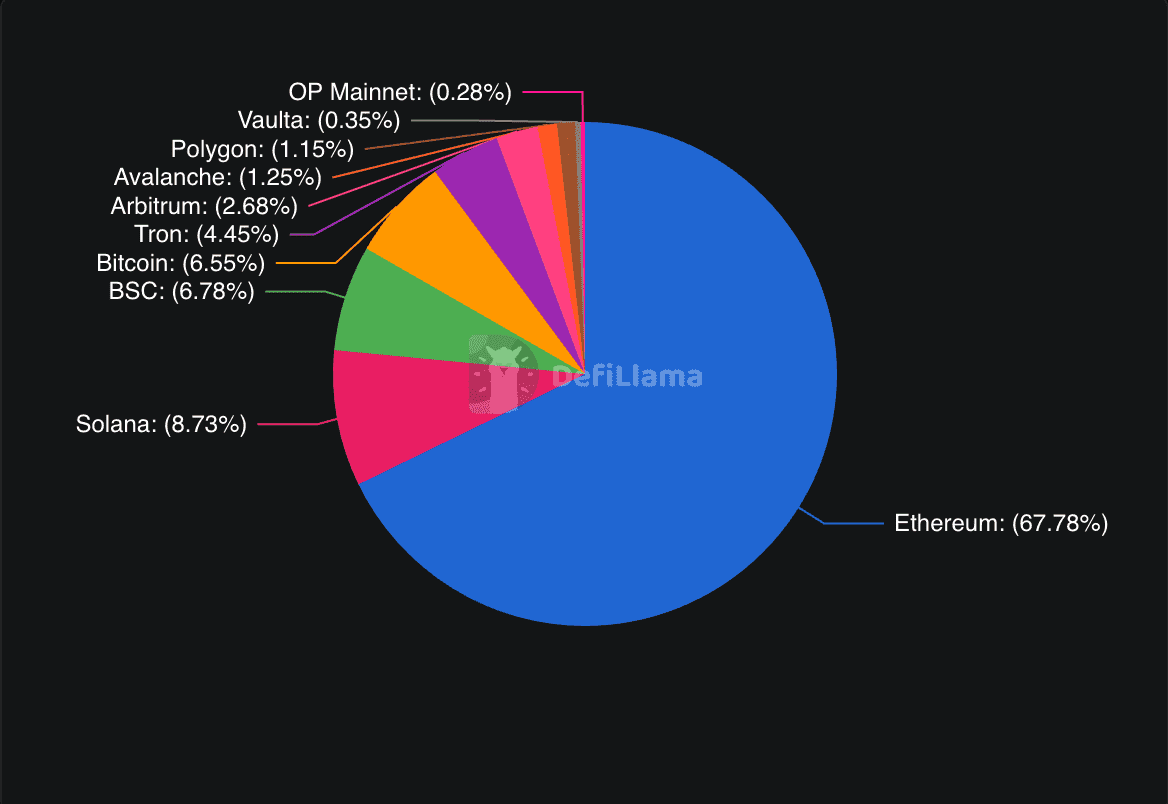
A Closer Look at the Numbers: Sui Stablecoin Flows in Context
To grasp why Sui stablecoin flows matter, consider the raw data. Sui's network not only hit $1.6 trillion YTD but also saw stablecoin supply swell 148% to $918 million by early 2025 highs. This isn't isolated; November's $168.8 billion in transfers alone outpaced many full quarters for rivals. Meanwhile, Polygon's stablecoin activity, once buoyed by DeFi hype, has plateaued as zk-rollup complexities deterred seamless scaling. Avalanche, despite subnet innovations, contends with fragmented liquidity that dilutes overall flows.
These disparities stem from ecosystem maturity. Sui's DeepBook and USDC-native support have ignited lending pools and DEX volumes, creating self-reinforcing liquidity. Protocols thrive when stablecoins stick, and Sui's parallel execution minimizes slippage during peaks. Polygon users, facing bridge delays, migrate elsewhere; Avalanche's warp messaging helps but can't match Sui's native object model for high-frequency trades.
Risks and Balanced Portfolio Allocation
No chain is immune, least of all one trading at $0.9332 after 2025's L1 dumps. Sui shared pain with Avalanche and TON as macro headwinds hit speculative tokens. Yet stablecoin resilience hints at decoupling: real usage trumps price hype. For diversified portfolios, allocate 5-10% to Sui exposure via SUI or DeFi positions, balancing against Ethereum's stability and Solana's volume lead. Watch for USDC expansions; their $16.1 billion Q1 growth disproportionately favors scalable L1s like Sui.
Grayscale's analysis underscores Sui's fee revenue chase against Solana, but with lower costs and Move's security, it carves a niche in perpetuals and RWA tokenization. As stablecoins exceed $300 billion across chains, Sui's slice grows, signaling bets on infrastructure over narratives. Aptos and Solana inflows last week reinforce this alt-L1 rotation, but Sui's TVL leap from $1 billion to $1.75 billion cements its edge.
Strategic minds track stablecoin volume sui network as a sentiment proxy. When Ethereum gas spikes and Tron clogs with retail, Sui's efficiency pulls capital. Pair this with on-chain volume; Solana's $1.6 trillion spot benchmark sets the bar, yet Sui's stablecoin focus primes it for DeFi dominance. For those eyeing Sui vs Polygon Avalanche stablecoins, the verdict favors the newcomer building quietly amid the noise.
Ultimately, Sui exemplifies how tech and timing converge. With SUI at $0.9332, patient allocators position for flows translating to token strength, diversifying resilience in a cycle prone to surprises.



No comments yet. Be the first to share your thoughts!